


With growing expectations for high-quality interior design, home lighting has become a core component of spatial design. It plays an essential role in crafting safe, comfortable lighting environments. Since the living room serves as the heart of the home, its lighting design directly shapes the overall atmosphere and quality of daily living. This article will introduce some practical lighting design ideas for your living room. Whether you're a new homeowner renovating or looking to give your existing home a fresh look, you'll find lighting solutions tailored to your space.
- Lighting: The Secret to a Well-Designed Living Room
- Understanding the Three Layers of Living Room Lighting
- Top Living Room Lighting Trends
- Choosing the Right LED Ceiling Light
- Benefits of LED Strip Lights in the Living Room
- Smart Lighting Systems for the Modern Living Room
- Common Living Room Lighting Mistakes to Avoid
Lighting: The Secret to a Well-Designed Living Room
A well-designed living room is never just a collection of furniture and colors—it’s a story shaped by light and space. Lighting plays a far more important role than most people realize. It doesn’t simply illuminate the room; it defines the room’s character.
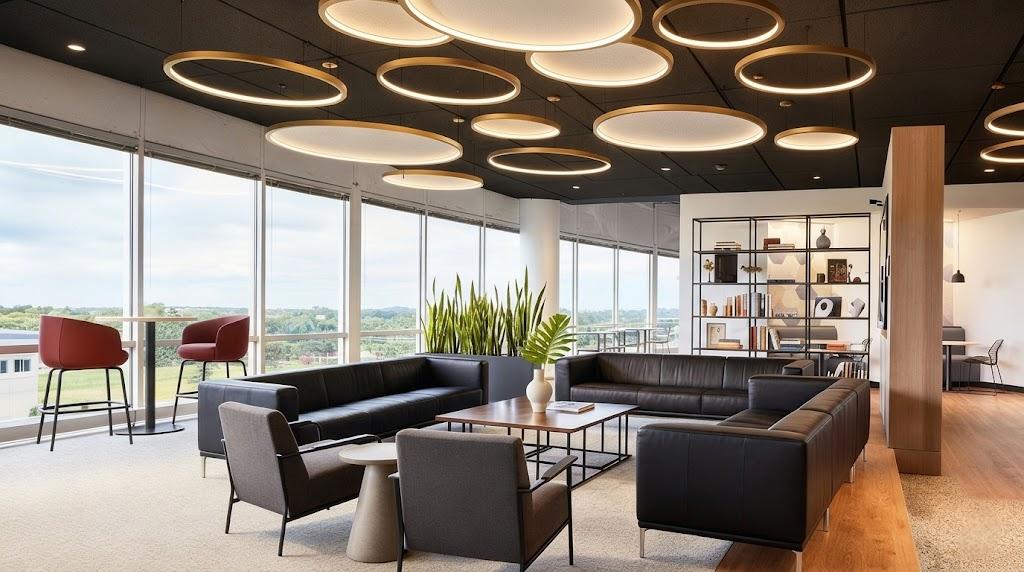
Lighting shapes the layers of a space. A living room without thoughtful lighting design often feels flat; every object is evenly illuminated at the same brightness, with no sense of focus or hierarchy. Once you introduce a mix of primary lighting, accent lighting, and decorative lighting, the room instantly gains depth and dimension.
Lighting also sets the emotional tone of a space. The same living room can feel completely different under different lighting conditions. Warm, golden light in the afternoon creates a relaxed, laid-back atmosphere, while bright white light keeps conversations lively and focused. Dim the ambient lighting to around 20%, and the room can transform into an immersive, intimate setting for movie nights.
Lighting can even correct spatial proportions. In fact, it’s one of the most affordable yet effective ways to reshape how a room feels. In a living room with a low ceiling, upward-directed lighting can lift the visual center and make the space feel taller. In a long, narrow layout, a horizontal arrangement of downlights can visually widen the room. And in an overly large living room, localized accent lighting can break the space into several cozy, functional zones.
Understanding the Three Layers of Living Room Lighting
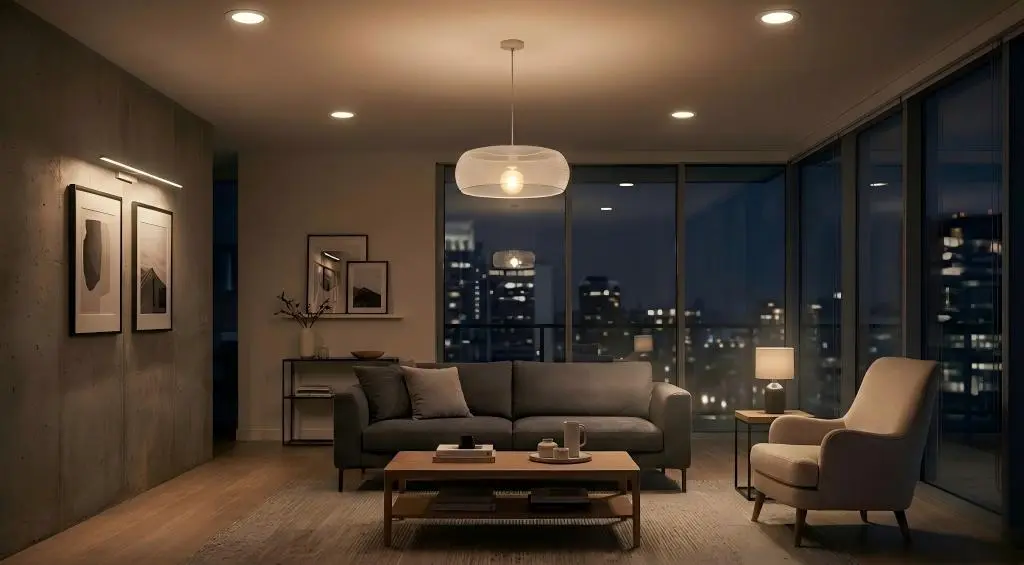
In living room lighting design, lighting is typically divided into three distinct layers, each serving a specific purpose while working in harmony with the others. These layers are ambient lighting, task lighting, and accent lighting. Only by combining all three effectively can an ideal lighting effect be achieved; relying solely on any one of them will prevent the living room's overall lighting from reaching its optimal state.
Ambient lighting is the first layer and the foundation of a room’s overall illumination. Its role is to provide a soft, even level of brightness throughout the space, allowing people to move around and carry out everyday activities comfortably while preventing the room from feeling dim or oppressive. Common fixtures used for ambient lighting include ceiling lights, pendant lights, chandeliers, and recessed downlights.
Task lighting serves as the second layer of living room illumination, primarily designed to meet the lighting needs of specific activities such as reading or working. As the name suggests, it involves light sources positioned around particular tasks. In living rooms, common examples include floor lamps beside sofas and table lamps on coffee tables. These fixtures typically offer good directionality and sufficient brightness, concentrating light precisely where users need it to deliver a more comfortable and efficient lighting experience.
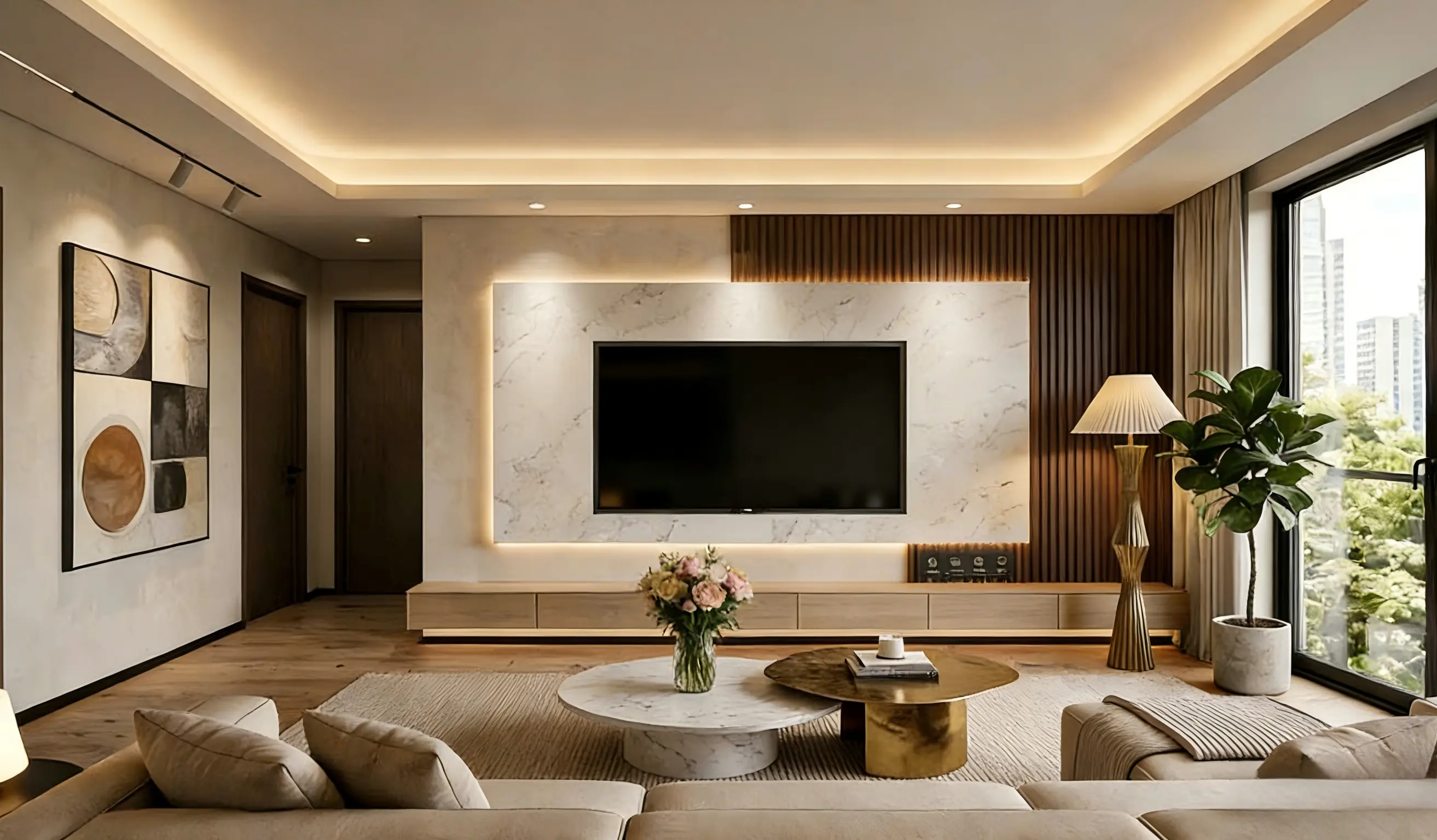
Accent lighting forms the third layer of living room illumination, with its core function not being to provide basic brightness but to highlight and emphasize visual focal points within the space. For instance, a hanging artwork, a sculpture, or a textured stone feature wall can be accentuated through directional spotlights or track lighting, transforming them into the visual center of the room while simultaneously defining clearer spatial contours and layering. Compared to other lighting methods, accent lighting typically employs higher light ratios to enhance contrast and visual appeal.
Top Living Room Lighting Trends
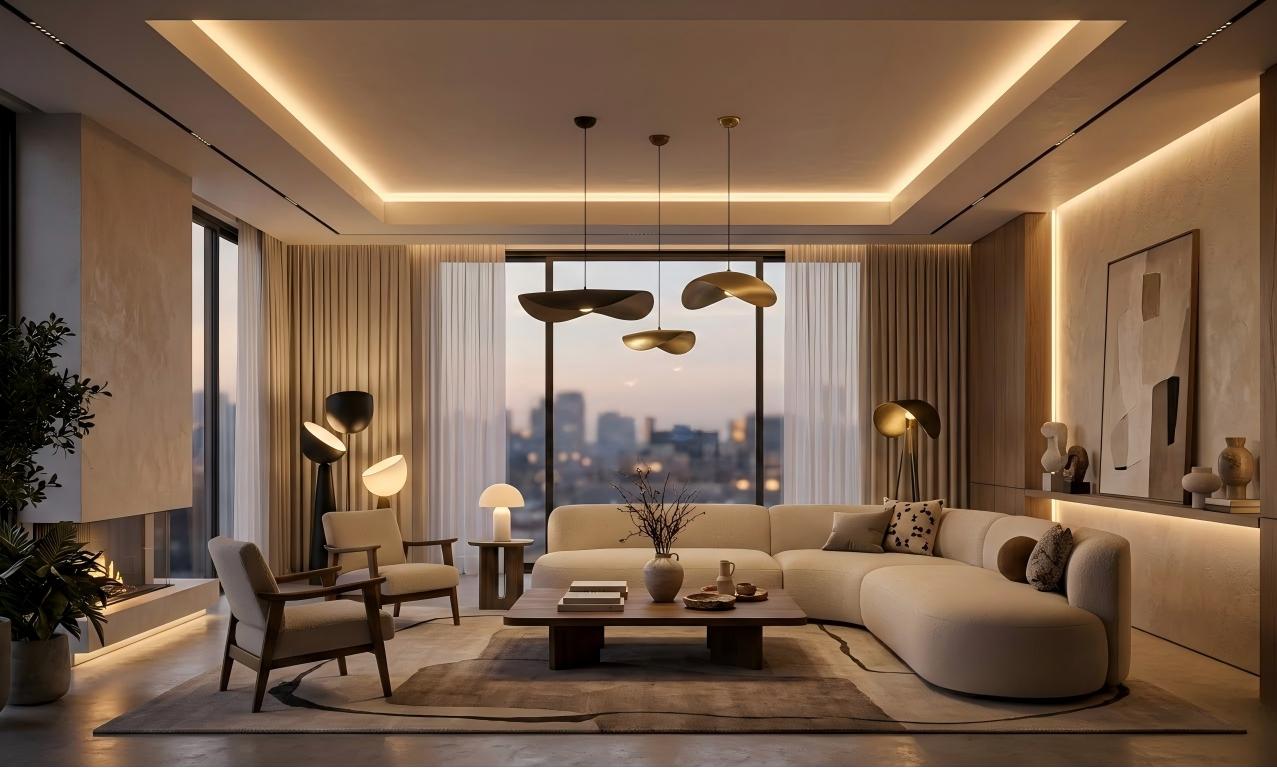
How to cultivate a sense of happiness in home life? Lighting, undoubtedly, is a long-underestimated yet crucial element. In recent years, one of the most prominent trends in home lighting has been the rise of non-main-light design. Simply put, this approach moves away from relying on a single dominant light fixture (such as a pendant or ceiling light) to illuminate an entire room. Instead, it employs zone-based lighting, strategically placing light sources according to the specific needs of different areas, ensuring illumination is directed only where it's truly needed.
Instead, different lights serve different scenarios and needs. For instance, in the living room: when family gathers for a gathering, bright and lively ambient lighting can heighten the festive atmosphere; when reading, a floor lamp with suitable color temperature can softly direct light onto the pages; and if you wish to enhance the visual impact of wall art, a precisely angled spotlight can lend it a gallery-like presence.
Choosing the Right LED Ceiling Light
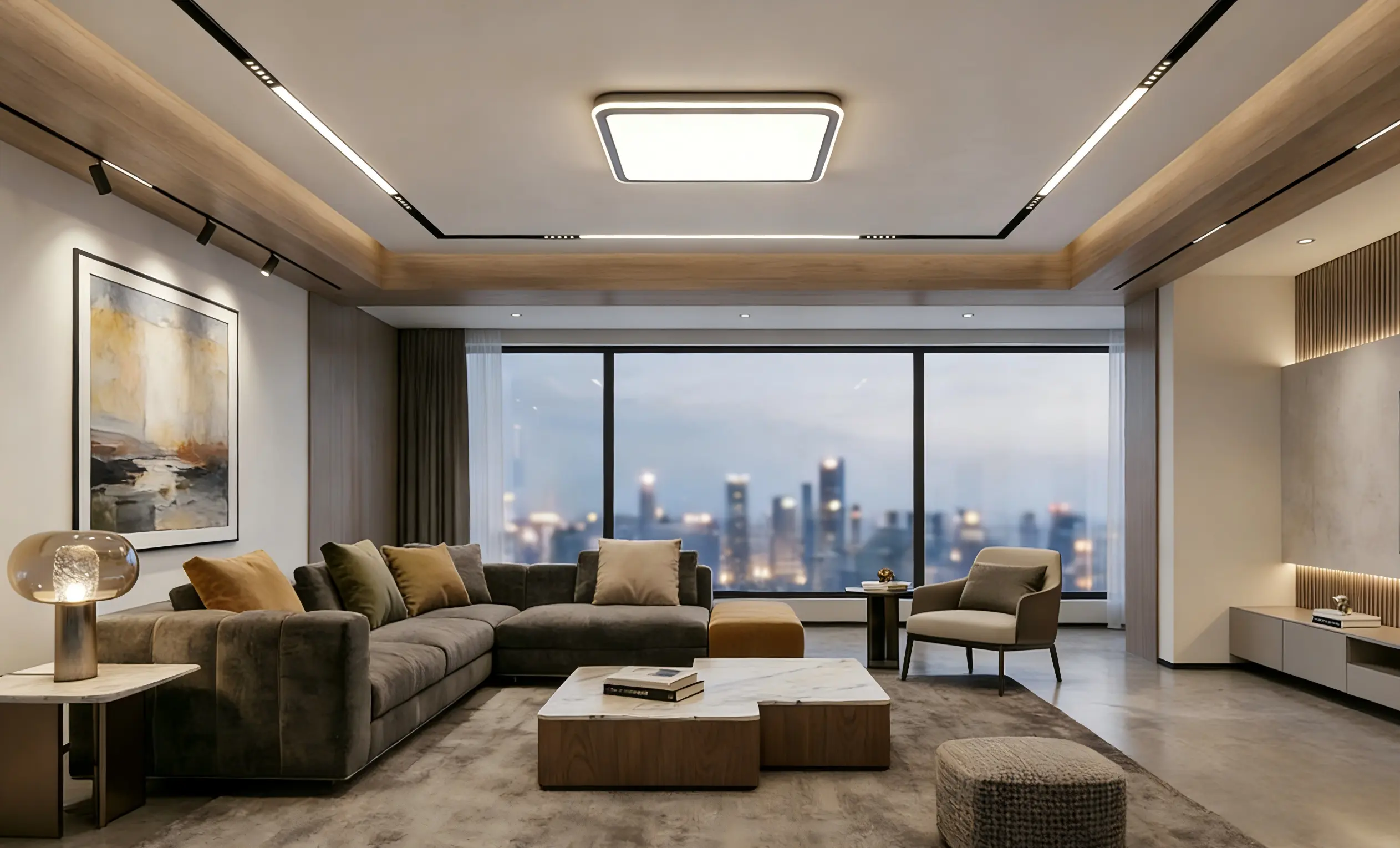
Among the many living room lighting options, LED ceiling lights have become a common choice for many households due to their simple installation, even light distribution, energy efficiency, and durability. However, to ensure a ceiling light truly delivers optimal illumination, consider the following five key factors when selecting one.
- Focus on brightness: Choose lumens based on living room size
Many people focus solely on wattage when selecting lights, but lumens (lm) are what truly determine brightness. Generally, a living room requires approximately 200–300 lumens per square meter. For instance, a 15-square-meter living room is best suited for fixtures with around 3000–4000 lumens. Proper brightness not only makes the space appear bright and comfortable but also prevents light from being too dim or overly harsh.
- Selecting the Right Color Temperature
Color temperature directly influences the overall ambiance of your living room. Lighting that's too warm may appear dim, while overly cool white light can make the space feel harsh. It's generally recommended to choose neutral lighting between 3000K–4000K. This range preserves a cozy feel while providing clear, natural illumination, making it suitable for various daily activities like relaxation, conversation, and entertainment.
- Pay Attention to Color Rendering Index (CRI)
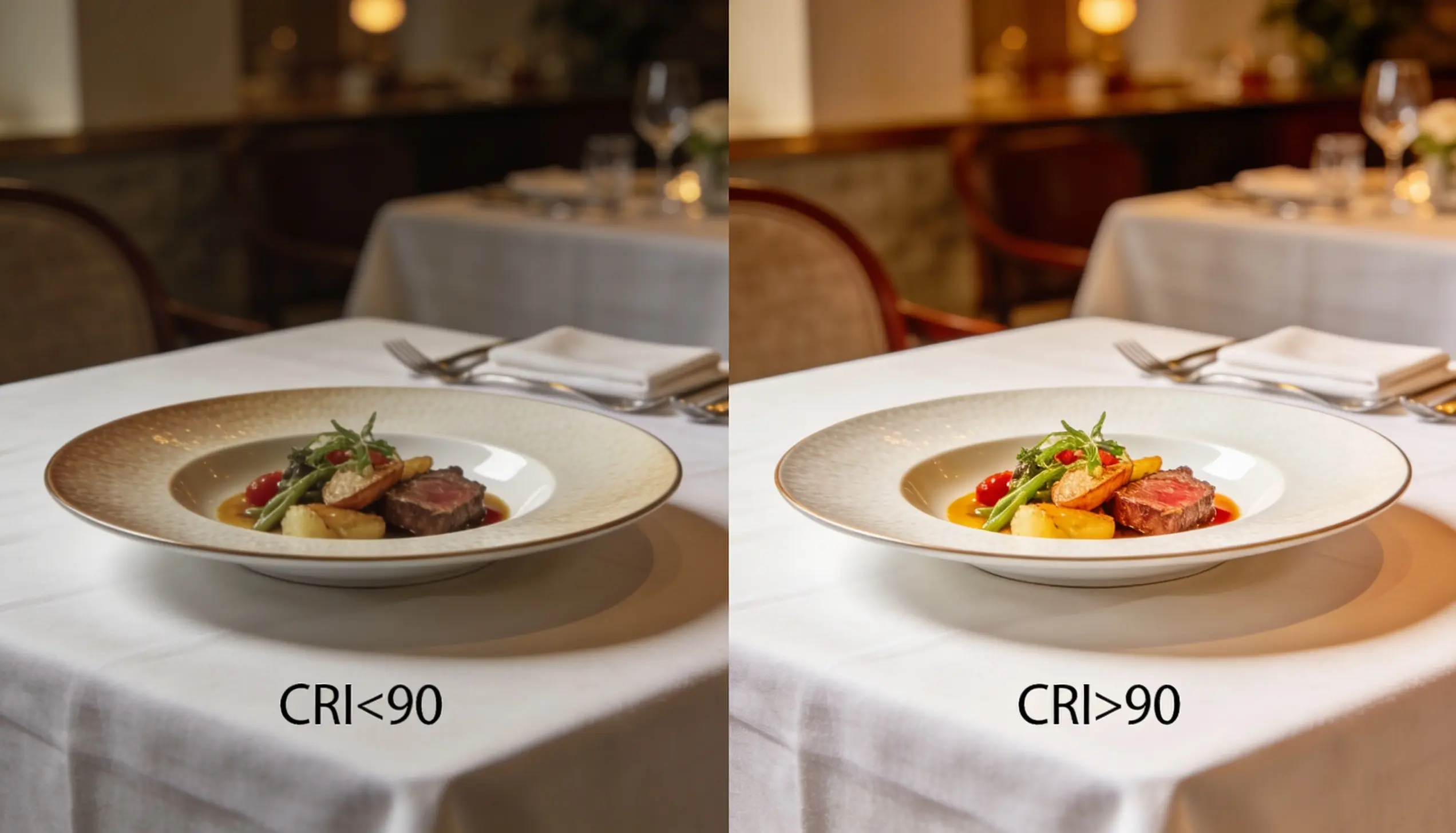
The Color Rendering Index determines whether objects appear true to their natural colors under artificial light. For general household use, choose fixtures with CRI ≥ 80. If you desire more vivid and accurate representation of furniture, decor, and wall colors, consider high-CRI products with CRI ≥ 90.
- Ensure Fixture Size Balances Living Room Proportions
Ceiling light dimensions should align with the living room's area and spatial proportions. Oversized fixtures can make the space feel oppressive, while undersized ones appear flimsy. Typically, select a fixture diameter based on the room's width or area to achieve visual harmony and balance.
- Prioritize dimmable or smart functionality
If feasible, opt for LED ceiling lights with dimming or smart control capabilities. Adjusting brightness or color temperature allows the living room to effortlessly adapt to various scenarios, such as daily gatherings, quiet reading, or nighttime movie viewing, thus enhancing lighting flexibility and comfort.
Benefits of LED Strip Lights in the Living Room
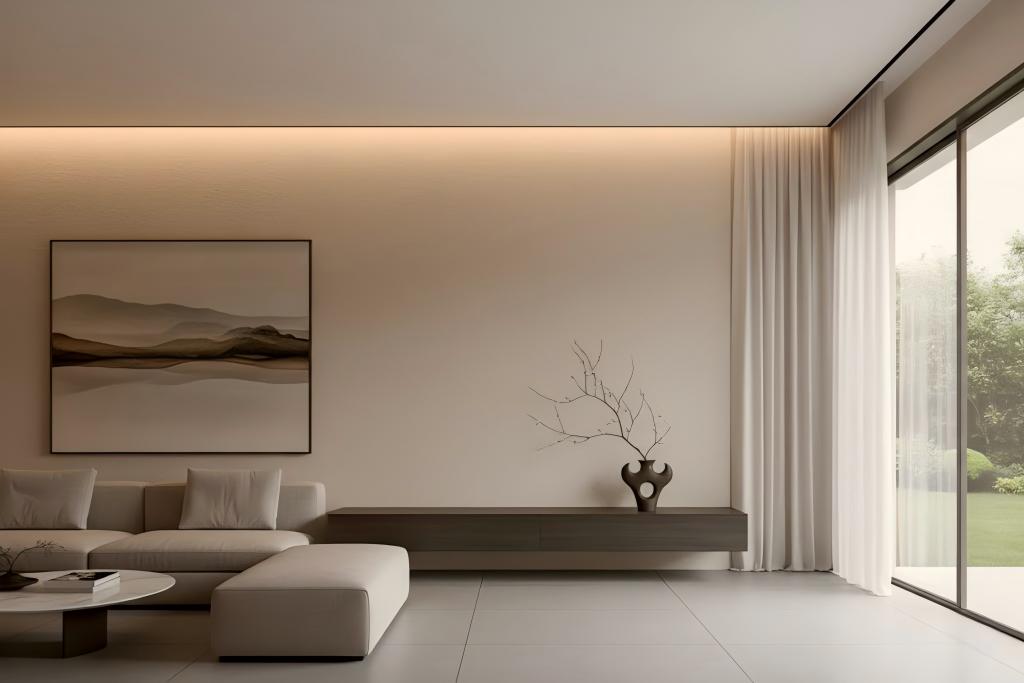
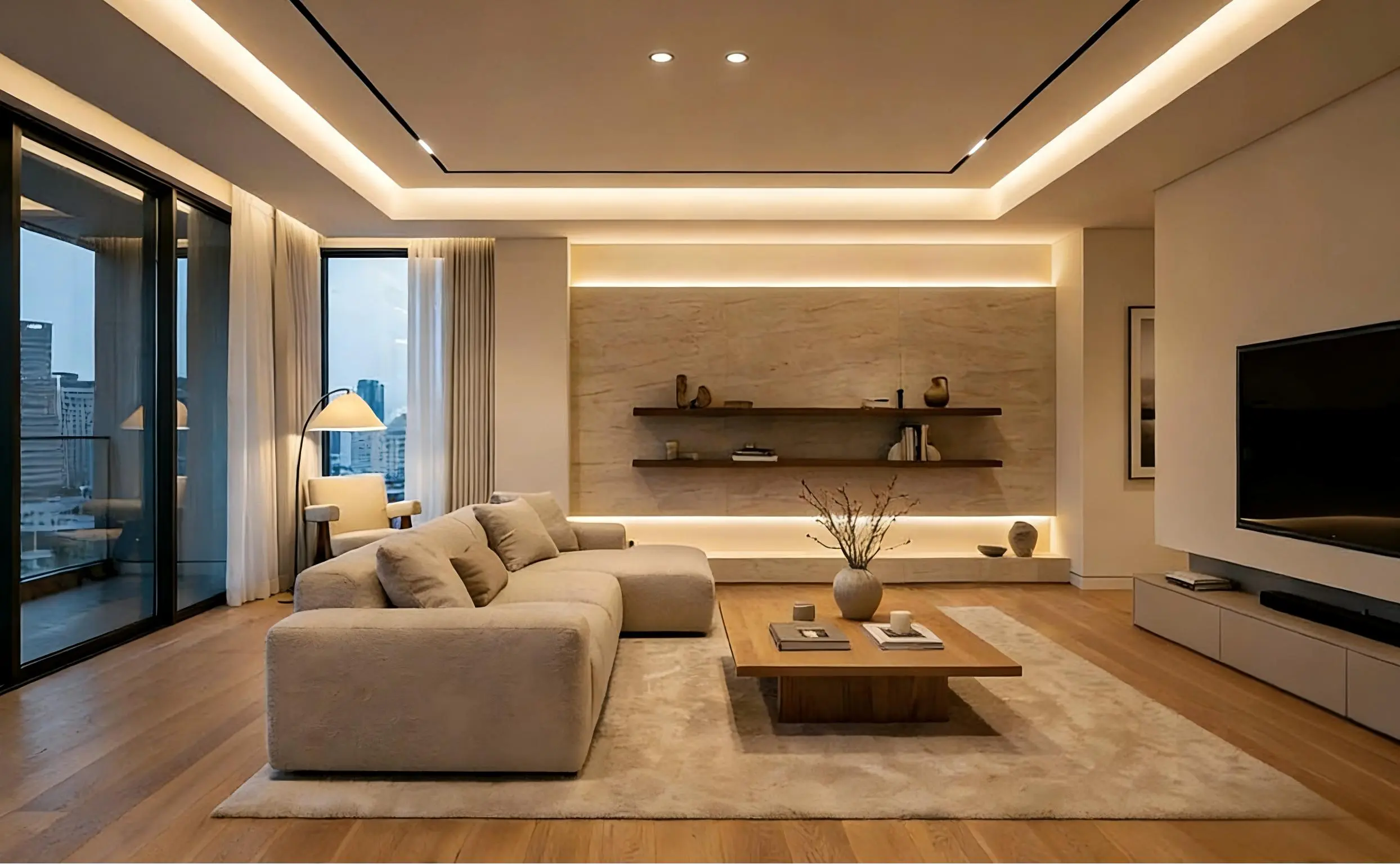
In living room design, LED strip lights are often installed in concealed ceiling coves. A light trough is typically reserved during the ceiling installation, and the strip lights are added later to create soft, indirect lighting. Compared with traditional direct lighting, LED strips are used more for decoration and atmosphere. It can outline the contours of the ceiling, enrich the spatial layers, while providing soft accent lighting to create a warmer, more comfortable atmosphere in the living room at night.
In certain spatial conditions, the advantages of LED strips become more pronounced. For instance, living rooms with poor natural light or dim illumination can benefit from increased ambient brightness provided by LED strips. In deep or expansive living rooms, these strips can further enhance the structural layering of ceilings, lending the space a more three-dimensional feel. However, in well-lit, compact spaces or areas prone to dust accumulation, installation should be approached with caution to avoid creating scattered light, diminishing spatial perception, or increasing cleaning demands. The decision to install should be based on a comprehensive assessment of both the interior design style and practical requirements.
Smart Lighting Systems for the Modern Living Room
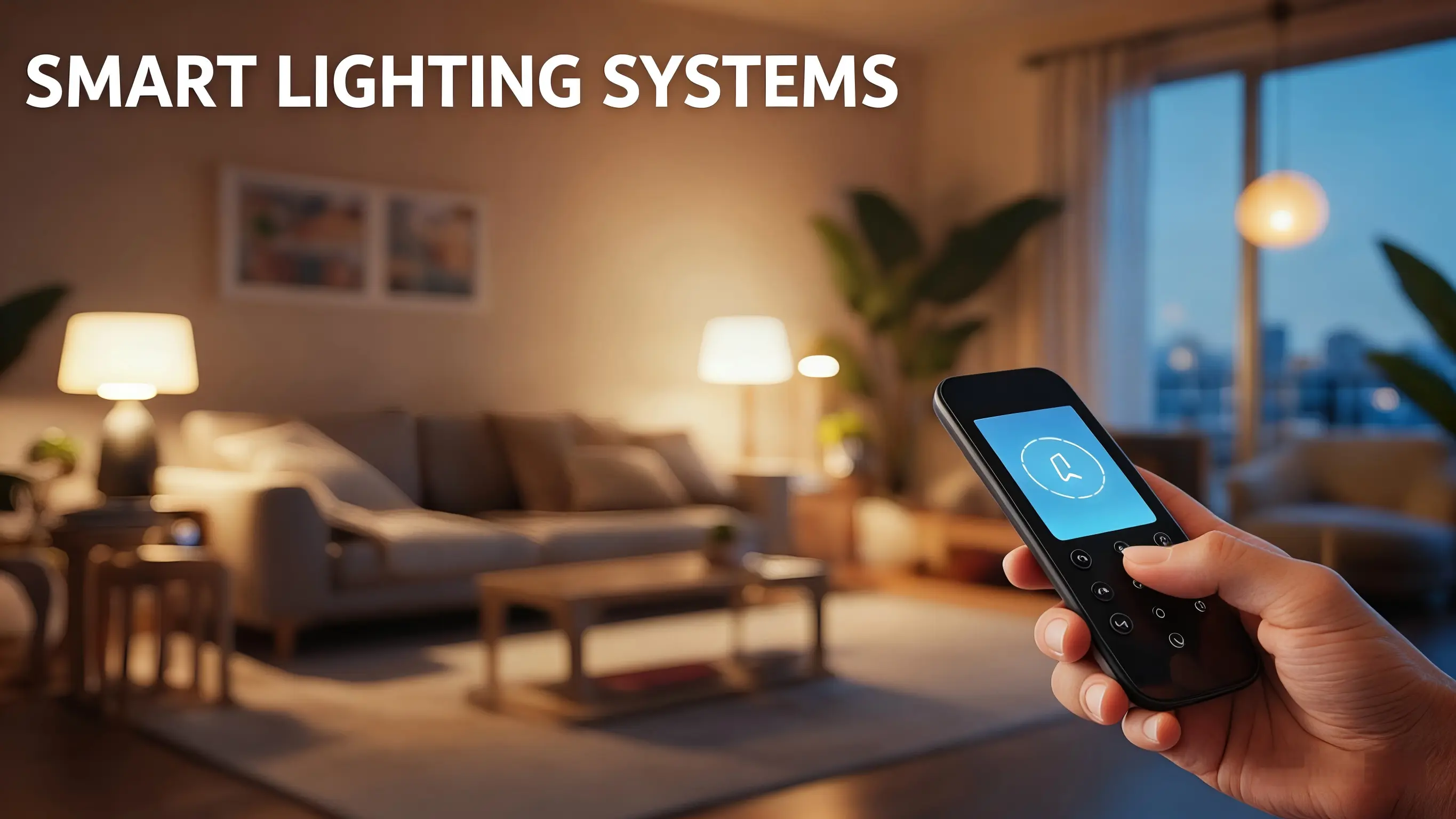
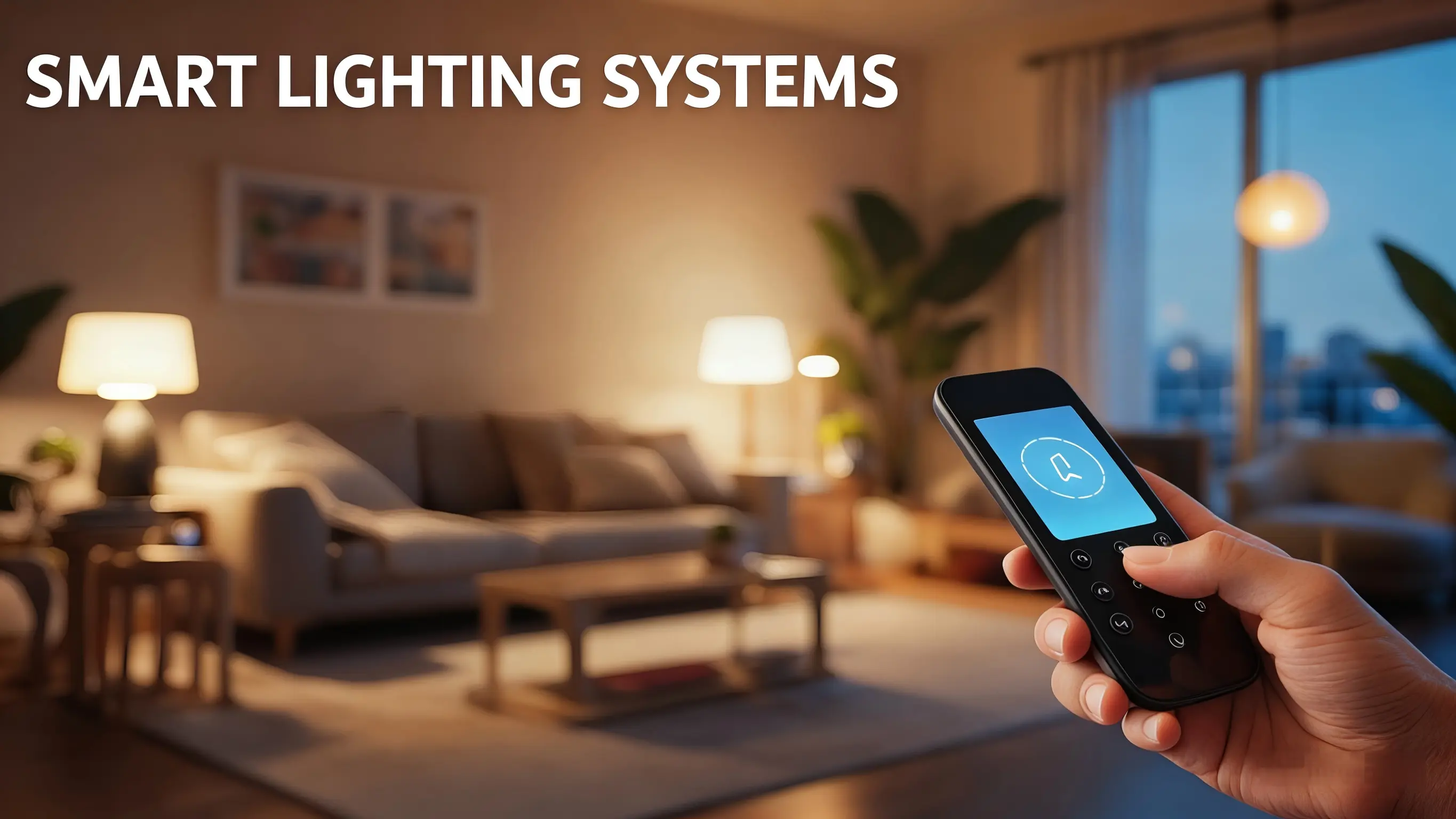
In modern living room design, smart lighting systems are increasingly becoming a key component for enhancing the residential experience. Unlike traditional lighting that serves only functional illumination, smart lighting emphasizes interaction between people and space. Through technology, it makes lighting more flexible, personalized, and better aligned with the rhythms of modern family life.
Specifically, smart lighting systems can be controlled via smartphones, voice commands, or smart panels to adjust brightness, alter color temperature, and switch between different scene modes. For instance, during family gatherings, a bright and lively reception mode can be activated; for reading or relaxation, the lighting can be adjusted to a soft, comfortable warm glow; and when watching movies at night, a single button press switches to a low-brightness ambiance mode, instantly transforming the entire living room atmosphere.
It is important to note that the core standards for smart lighting design primarily include appropriate illuminance levels, comfortable shadows, suitable color temperature, high color rendering, glare-free operation, and adaptable lighting scenes. These elements collectively form the fundamental principles of modern smart lighting.
Common Living Room Lighting Mistakes to Avoid
In living room lighting design, a well-planned layout can enhance comfort and create depth in the space. However, poor design choices can easily compromise the overall living experience. Below are common living room lighting mistakes to avoid during planning:
- Relying Solely on a Single Main Light
Many living rooms still use only one pendant or ceiling light as the sole light source, which can make the space appear monotonous and lacking in dimension. A more ideal approach combines ambient lighting, task lighting, and accent lighting to create a multi-layered light structure.
- Lighting that is too bright or too dim
Excessive brightness can cause glare, while insufficient light impedes daily activities. Select fixture brightness appropriately based on the living room's size to ensure the space is both well-lit and comfortable.
- Neglecting color temperature coordination
Inappropriate color temperature choices can disrupt the space's ambiance. For instance, overly cool white light may make the living room feel harsh. Generally, light between 3000K–4000K is recommended as it better suits family living room environments.
- Unreasonable fixture positioning
Unevenly distributed fixtures can create dark corners or excessive shadows. Strategically planning fixture placement ensures more uniform and natural lighting throughout the space.
- Neglecting Ambient Lighting
Many living rooms focus solely on task lighting while overlooking ambient sources like light strips, sconces, or floor lamps. Incorporating these supplementary lights creates a warmer, layered ambiance.
In conclusion, living room lighting design should prioritize not just brightness, but also layering, atmosphere, and functionality. Avoiding these common mistakes will help you to create a comfortable and aesthetically pleasing lighting environment for your daily life.
By now, have you found inspiration to revamp your living room lighting? Which lighting combination are you most eager to try? Follow UPSHINE Lighting for more lighting guides tailored to different home settings. We'll help you avoid common lighting traps and effortlessly transform your living room with light and shadow!