


In modern lighting design, rope lights and LED strip lights have become increasingly popular due to their versatility and strong decorative appeal. They are widely used across residential, commercial, and landscape lighting applications. While these two lighting solutions may appear similar at first glance, they differ significantly in terms of structural design, lighting performance, installation methods, and ideal use cases. In this article, we’ll take a closer look at the key differences between rope lights and LED strip lights to help you choose the most suitable option for your specific lighting needs.
What are Rope Lights?
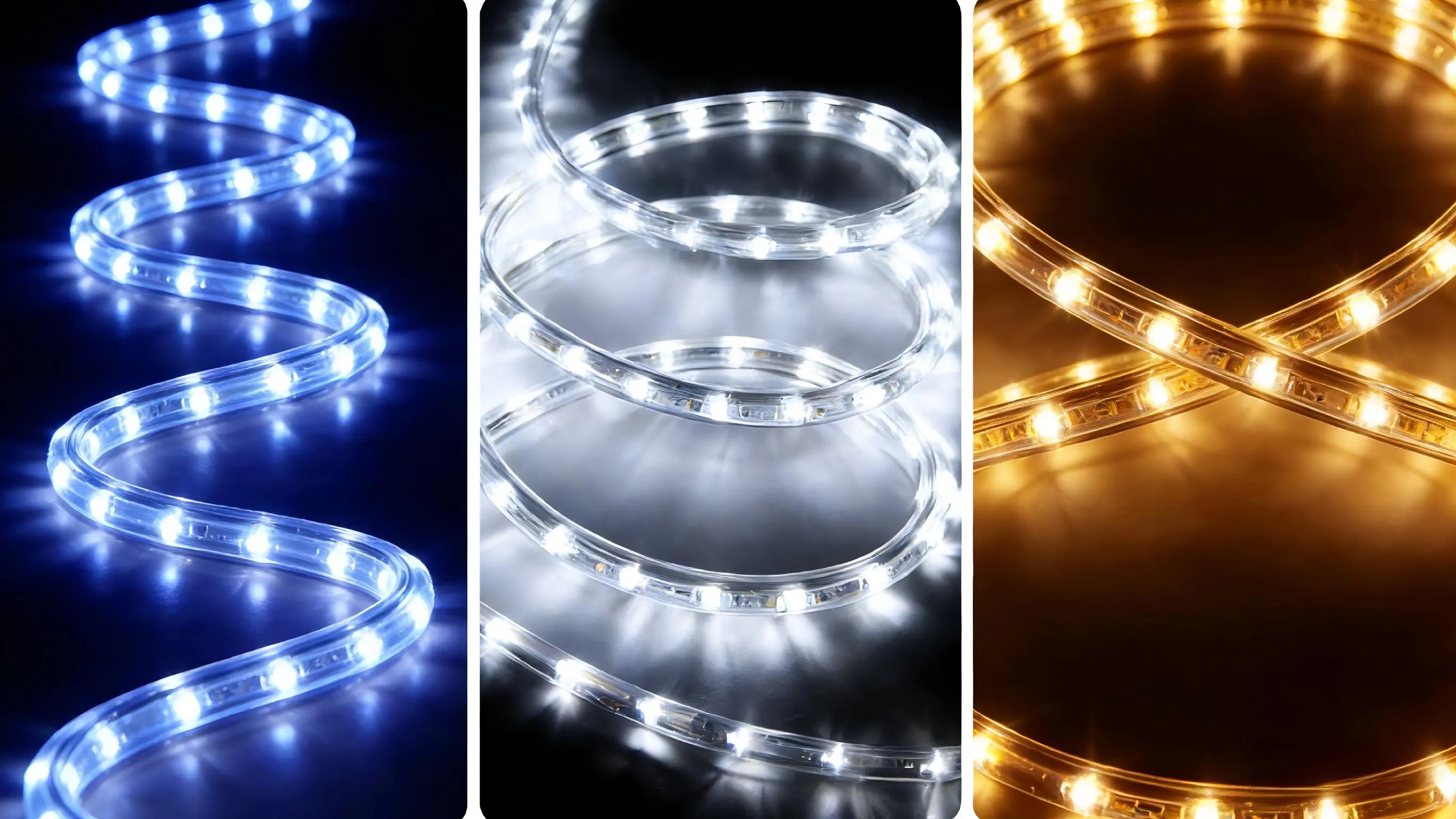
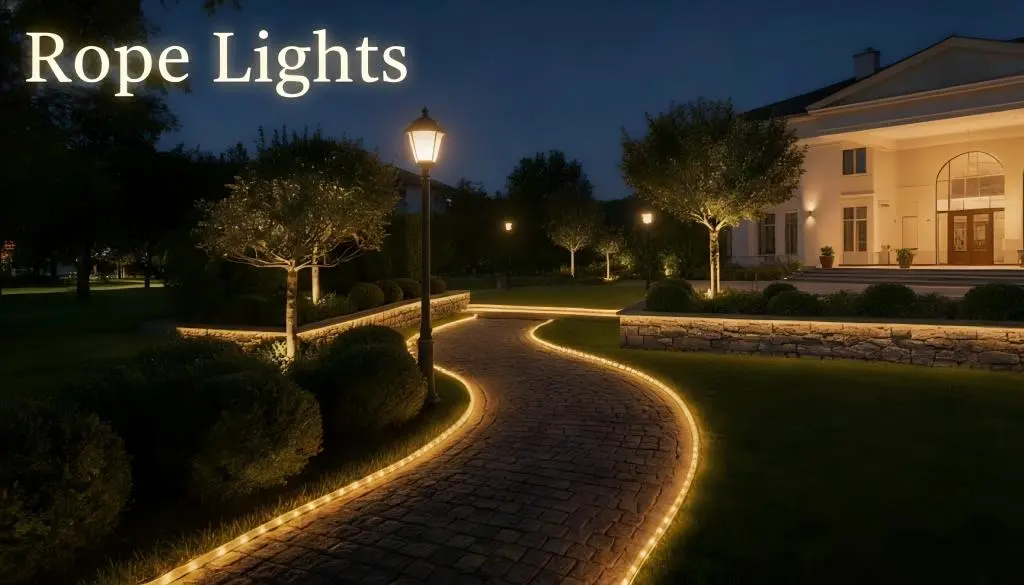
Rope lights are primarily decorative lighting products, named for their rope-like appearance. They typically consist of individual LED light sources or small incandescent bulbs enclosed within a transparent or semi-transparent cylindrical tube, creating a continuous line of illumination. Featuring a 360-degree beam angle, rope lights produce a soft, evenly diffused glow rather than high brightness, making them ideal for ambient and outline lighting rather than functional task lighting. With excellent flexibility and adaptability, rope lights are widely used in both indoor and outdoor applications, including decorating contours, landscape lighting, and atmosphere enhancement.
Pros & Cons of Rope Lights
If you're considering using rope lights for your lighting projects, it's important to weigh up their advantages and limitations to see if they're suitable for your space.
- Pros of Rope Lights
| Versatility | Rope lights are suitable for a variety of indoor and outdoor settings. |
| Easy Installation | It is lightweight and simple to mount using clips or channels, making DIY installation easy. |
| Flexibility | Thanks to their soft, bendable design, they can easily follow curves and wrap around surfaces. |
| Beam Angle | With 360° omnidirectional illumination, they provide even and soft lighting. |
| Durability | The lights are protected by the tubing, which stops dust and moisture from reaching them and thereby increases their lifespan. |
| Color | Rope Lights offer a variety of color options, making it easy to create different atmospheres and decorative effects. |
- Cons of Rope Lights
| Limited Brightness |
Rope lights produce a soft, gentle glow and typically operate at 12V or 120V. This makes them unsuitable for primary or task lighting, as they are relatively dim. |
| Lower Efficiency |
Rope lights are less energy-efficient and have lower light output compared to high-performance LED strips. |
|
Limited Color Range |
These rope lights offer fewer color range options, typically limited to single colors or warm white light, making it difficult to meet diverse color requirements. |
What are LED Strip Lights?
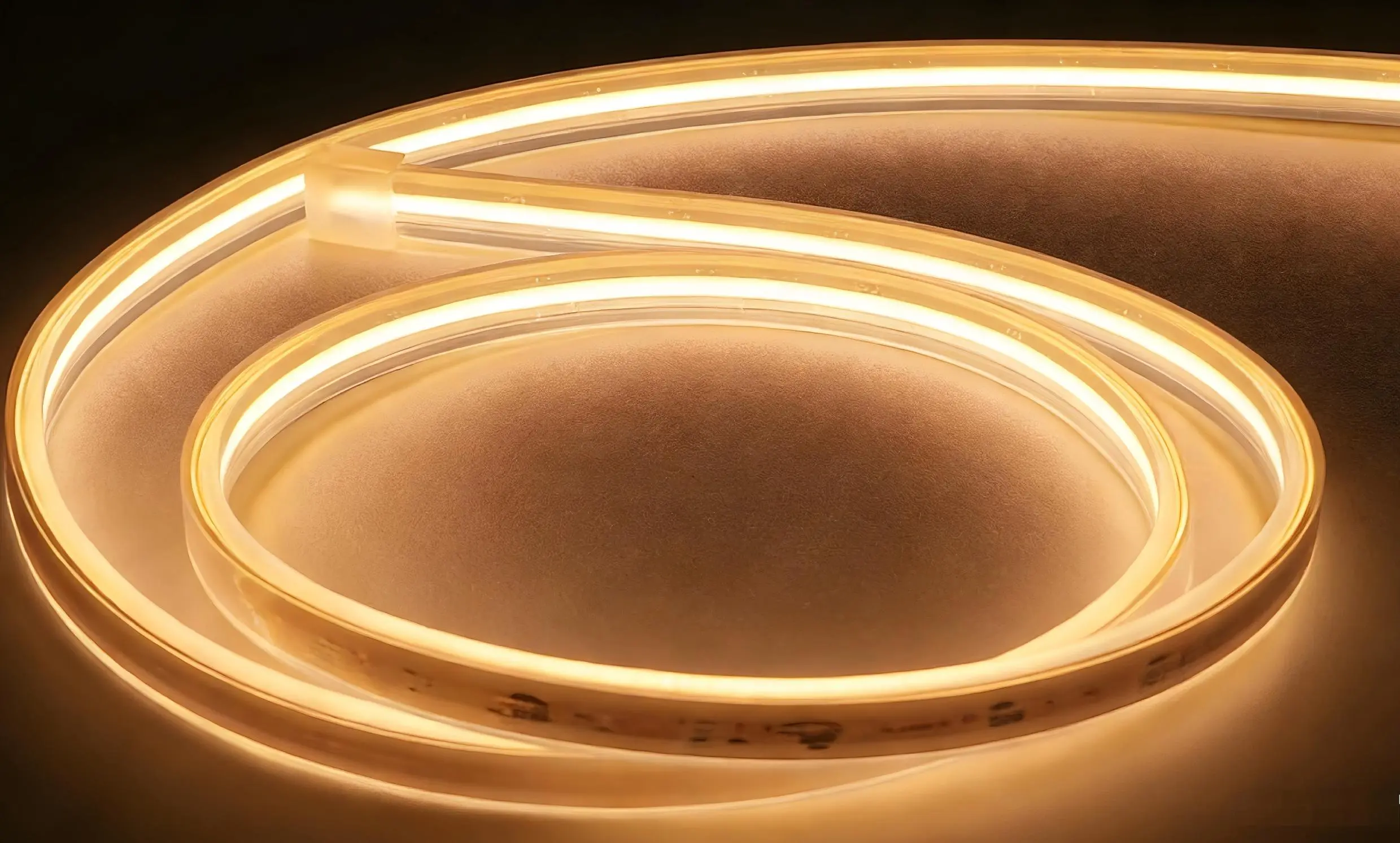
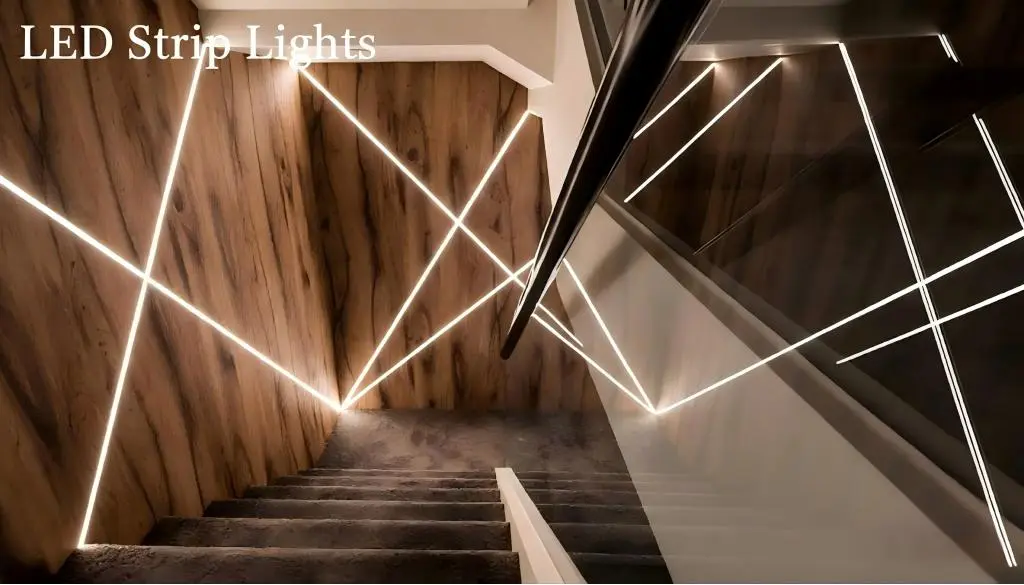
LED strip lights, also known as LED tape lights, are linear lighting products made up of multiple LED chips mounted on a thin, flexible circuit board. The back of the circuit board typically has high-adhesion tape for quick and easy installation on a variety of surfaces.
One of the key advantages of LED strip lights is their flexibility. They can be cut and bent to suit specific design requirements, making them ideal for customised lighting and decorative applications. With installation options such as straight runs, curved layouts or wrap-around designs, LED strip lights offer great design freedom. They also deliver high luminous efficiency, low energy consumption and a long service life.
Because of these benefits, LED strip lights are widely used for backlighting, decorative lighting and accent lighting. They are suitable for residential, commercial, landscape and various decorative lighting projects, making them a popular and practical choice in modern lighting design.
Pros & Cons of LED Strip Lights
Are you considering using LED light strips to enhance your space's ambiance? Before making a decision, it's crucial to understand the advantages and limitations of LED light strips. Next, we'll briefly analyze the pros and cons of LED light strips to help you make an intelligent choice.
- Pros of LED Strip Lights
| Energy Efficient | LED strip lights consume less electricity while providing consistent brightness. |
| Longevity | LED strip lights have a long service life, reducing replacement frequency. |
| Durability | LED strip lights are resistant to shock and vibration during daily use. |
|
Easy Installation |
LED strip lights can be quickly installed using adhesive backing or mounting accessories. |
| Flexible | LED strip lights can be bent and cut to fit different installation shapes. |
| Multiple Color Options |
LED strip lights are available in various colors and color temperatures. |
- Cons of LED Strip Lights
|
Low Light Intensity |
LED strip lights are less bright than other LED fixtures, making them unsuitable as primary lighting. |
|
Outdoor Use Limitations |
LED strip lights can be easily damaged in humid or dusty environments, as they often lack sufficient protection against moisture and particles. |
|
Heat Sensitivity |
Because LED strip lights are sensitive to heat, proper heat dissipation must be ensured during installation to prevent reduced performance and a shorter lifespan. |
Key Differences Between Rope Lights and LED Strip Lights
- Structure & Design
Rope lights consist of small bulbs encased in a flexible plastic tube, while LED strip lights are made of multiple LED chips mounted on a thin, flat, flexible circuit board.
- Flexibility & Customization
LED strip lights are highly flexible and can be cut to length, bent around corners, or shaped to fit custom designs; rope lights are less adaptable due to their thicker tubing.
- Brightness & Efficiency
LED strip lights generally provide higher brightness with lower energy consumption, whereas rope lights produce softer, ambient light but are less efficient.
- Beam Angle
Rope lights emit light in all directions, while most LED strip lights have a narrower 120° beam, making full 360° illumination harder to achieve.
- Color Options
LED strip lights offer a wide range of colors, tunable white, and RGB/RGBW options; rope lights usually come in single colors or limited shades.
- Installation
LED strip lights feature adhesive backing for easy mounting, while rope lights require clips or channels for installation.
- Durability & Protection
LED strip lights can be waterproof or weatherproof with appropriate ratings, while rope lights are more prone to wear or damage over time, especially in harsh conditions.
- Applications
LED strip lights are versatile for accent, task, and decorative lighting indoors and outdoors; rope lights are mainly used for decorative or accent lighting where soft illumination is sufficient.
- Customization
LED strip lights offer flexible sizing since they can be cut at marked intervals, allowing precise adjustments for different projects. In contrast, rope lights come in fixed lengths and cannot be shortened without risk, so you must choose the right size upfront.
Rope Lights vs. LED Strip Lights: Which are Better for Your Project?
When choosing between rope lights and LED strip lights, it’s important to consider your project requirements and the environment in which they will be installed. Rope lights provide soft, even illumination, and their durability and flexibility make them ideal for outdoor or curved decorative lighting. However, they offer limited brightness and lower energy efficiency, and they cannot be easily cut to size. In contrast, LED strip lights deliver higher brightness and excellent energy efficiency. They can be cut and dimmed to size and are perfect for tight spaces and various decorative applications. Thanks to their high level of customization and adaptability to multiple scenarios, LED strip lights are often more popular among consumers. As the professional lighting solution provider, we recommend selecting the right light source for your specific needs to achieve optimal illumination and energy efficiency.
FAQs
- Are LED Strip Lights Brighter Than Rope Lights?
Yes. LED strip lights use more efficient LED chips, producing higher brightness than rope lights.
- Can I cut rope lights or LED strip lights to fit my space?
LED strip lights can be cut at marked intervals for customization. Rope lights have fixed lengths and cannot be shortened without damaging the wiring.
- What is the maximum length for a run of rope light?
The maximum run of a rope light varies by setup. It depends on the voltage and type of the rope light, as well as the current capacity of the power plug and controller.
- Which is better for outdoor use?
Rope lights are durable and flexible, making them suitable for outdoor or curved installations. LED strip lights can also be used outdoors if they have the proper waterproof rating (IP65 or above).
- Do LED strip lights consume more energy than rope lights?
No. LED strip lights are generally more energy-efficient than rope lights while providing higher brightness.
- Which one is more versatile for decoration?
LED strip lights are more versatile due to their flexibility, cuttability, dimming options, and variety of colors, making them suitable for a wider range of applications.
- Can both types be dimmed or controlled?
Most LED strip lights support dimming and smart controls, whereas rope lights are usually fixed-brightness and lack advanced control options.
- Which option is better for creating ambiance lighting?
Rope lights are ideal for soft, uniform ambient lighting, while LED strip lights are better for accent, backlighting, or task-oriented decorative lighting.