


In the field of lighting, many people still use watts (W) as an indicator of how bright a bulb is. In reality, this is an outdated approach. Watts measure energy consumption, not the amount of light produced. Thanks to the rapid advancement of LED technology, lighting products have become far more efficient, delivering higher brightness levels while using less power. Consequently, the notion that "watts equal brightness" is no longer valid.
A more accurate and intuitive metric has taken its place instead: lumens (lm). Lumens measure the total amount of visible light emitted by a fixture, essentially the brightness that we perceive. Whether in residential lighting, commercial spaces or industrial applications, lumens have become the key standard for evaluating lighting performance.
In this guide, we’ll explain the concept of lumens, how they differ from watts, the recommended lumen levels for different spaces and how to make more informed lighting choices in real-world applications. Whether you're a homeowner or a lighting professional, this article will help you make smarter, more efficient lighting decisions.
What are Lumens in Lighting?
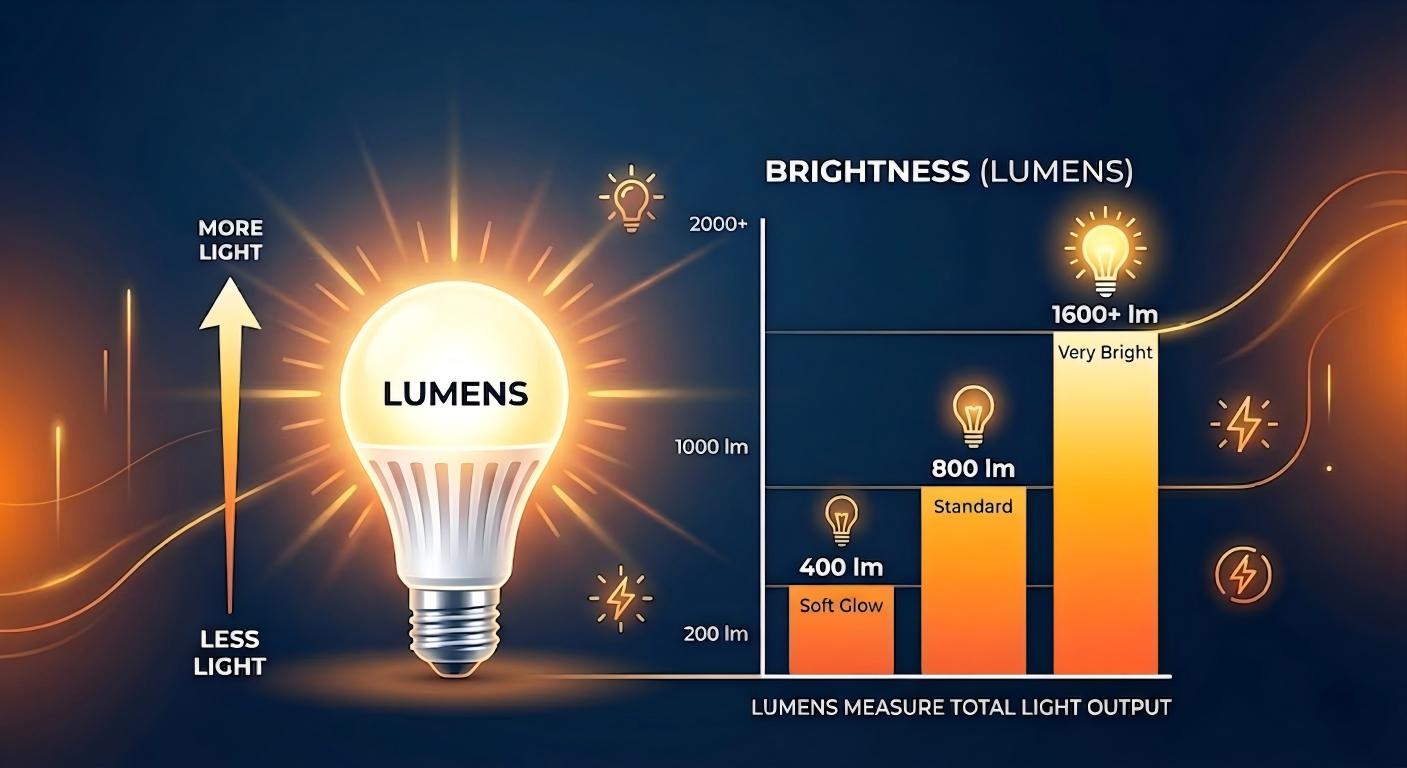
Lumens (lm) are the unit used to describe the brightness of a light bulb and serve as the go-to standard for modern LED lighting. Simply put, lumens measure the actual amount of light a fixture emits. The higher the lumen count, the brighter the overall light output will be.
It’s important to clarify that "lumen lighting" isn't a specific category of lamp; rather, almost every lighting product uses lumens to define its performance. For instance, a downlight rated at 800 lumens means it generates a total light output of 800 lumens. In a real-world setting, this level of brightness is typically enough to cover about 1.5 to 2 square meters of living space, providing ample and even illumination for tasks like reading, cooking, or highlighting artwork.
Ultimately, when shopping for lights, you should view lumens as your primary benchmark for brightness. This is why, in the world of modern LEDs, lumens have become a far more critical reference point than wattage.
Lumens vs. Watts: What You Need to Know
When most people shop for light bulbs, they instinctively check the wattage: the higher the wattage, the brighter the light. And, to be honest, that wasn't wrong for most of lighting history. During the era of incandescent bulbs, all bulbs converted electricity to light with roughly the same efficiency, meaning that wattage and brightness moved together in a predictable, linear way. Picking by watts worked just fine.
Then LEDs came along and changed everything. Watts measure energy consumption, not brightness: two 10W bulbs can produce dramatically different amounts of light depending on how efficiently they convert power into lumens. The correct unit to consider is the lumen (lm), which is a direct measure of how much visible light a bulb emits. More lumens means more light. It's as simple as that.
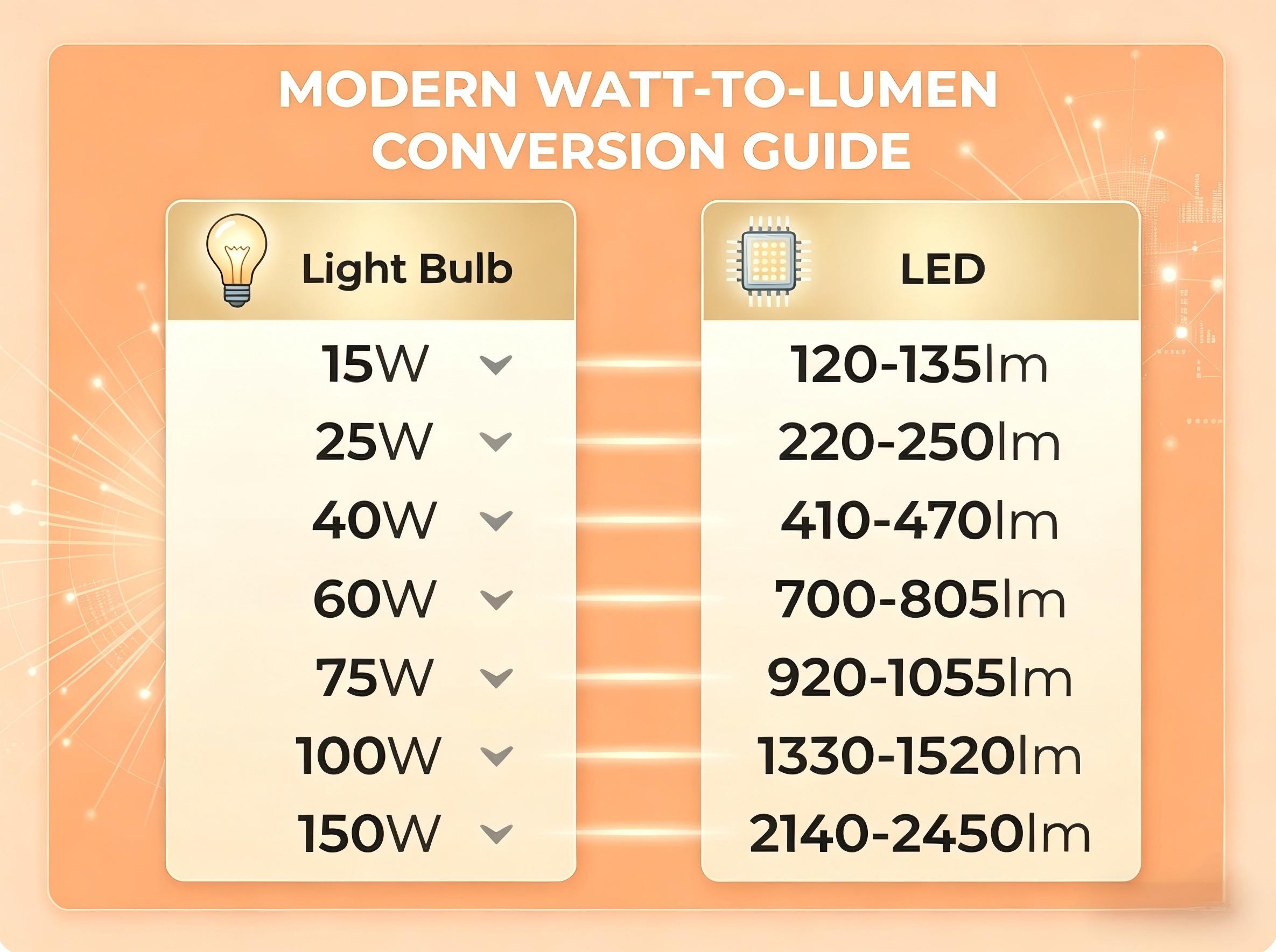
So why did watts ever work as a proxy for brightness? Because incandescent bulbs were remarkably consistent in their inefficiency — the relationship between wattage and light output was stable enough to be useful. LEDs blew that relationship apart. A modern LED bulb is roughly six times more efficient than an incandescent bulb, meaning a 10W LED bulb can match the brightness of a traditional 60W bulb. The same light output uses a fraction of the electricity.
This is precisely why schools, government buildings and commercial offices have been swapping old fixtures for LEDs — it's not just about being eco-friendly; it's also about significantly reducing operating costs without compromising on brightness.
The next time you buy a bulb, don't ask "How many watts is it?" Ask instead: 'How many lumens does it deliver?' That's the number that actually tells you how bright your space will be.
If you’re unsure about the difference between watts and lumens, the conversion chart below provides a clear comparison between the two.
Are Higher Lumens Always Brighter?
Many people assume that the higher the lumens, the brighter the light. While this intuition is not entirely wrong, there is indeed a positive correlation between lumens and brightness. In reality, however, it’s more nuanced.
Lumens measure the total amount of light emitted by a light source. However, what our eyes perceive as brightness is essentially the density of light falling on a specific surface or in a specific direction. Even with the same total light output, the perceived brightness can vary significantly depending on how the light is distributed. Two key factors come into play:
1. Beam angle: Is the light focused or spread out?
A narrower beam angle concentrates light into a smaller area, increasing light density and making it appear brighter. In contrast, a wider beam angle spreads the light over a larger area, creating a softer, more uniform effect. This is why a spotlight appears much more intense than a floodlight despite having the same lumen output.
2. Luminous efficiency: How effectively is energy converted into light?
Even if two fixtures have the same lumen output rating, their actual performance may differ. High-efficiency lights convert more electrical energy into visible light and lose less energy as heat, delivering stronger real-world brightness. Conversely, lower-efficiency products waste more energy as heat, resulting in perceived brightness that falls short of the stated lumen value.
While lumens are a crucial factor when choosing lighting, they are not the only factor to consider. For large spaces or applications requiring uniform illumination, fixtures with a higher lumen output and a wider beam angle are typically the better choice. For tasks such as reading, display lighting or accent lighting, a narrower beam angle combined with good luminous efficiency provides more precise and comfortable illumination.
How Many Lumens Do You Really Need?
The same light fixture might be just right in a bedroom, but if moved to a kitchen countertop, it would appear dim and make tasks difficult, because different spaces and activities have vastly different requirements for light intensity.
Generally speaking, we can broadly categorize lumens requirements based on a space’s function and usage scenarios as follows:
- Relaxation and Leisure Spaces: Soft, low-intensity lighting
Spaces designed primarily for relaxation, such as bedrooms and lounges, do not require intense light stimulation. Ambient lighting of around 20–40 lumens per square meter is usually sufficient to create a warm and comfortable atmosphere; overly bright light can actually make it difficult to fall asleep or relax.
- Daily Living Spaces: Even Lighting with Comfort in Mind
The living room is the most frequently used area in the home and hosts the widest variety of activities—from watching TV to chatting and reading. It is recommended to maintain overall ambient lighting between 100–150 lumens per square meter, complemented by dimmable task lighting to flexibly accommodate different scenarios.
- Functional Work Spaces: Bright and Clear, Reducing Eye Strain
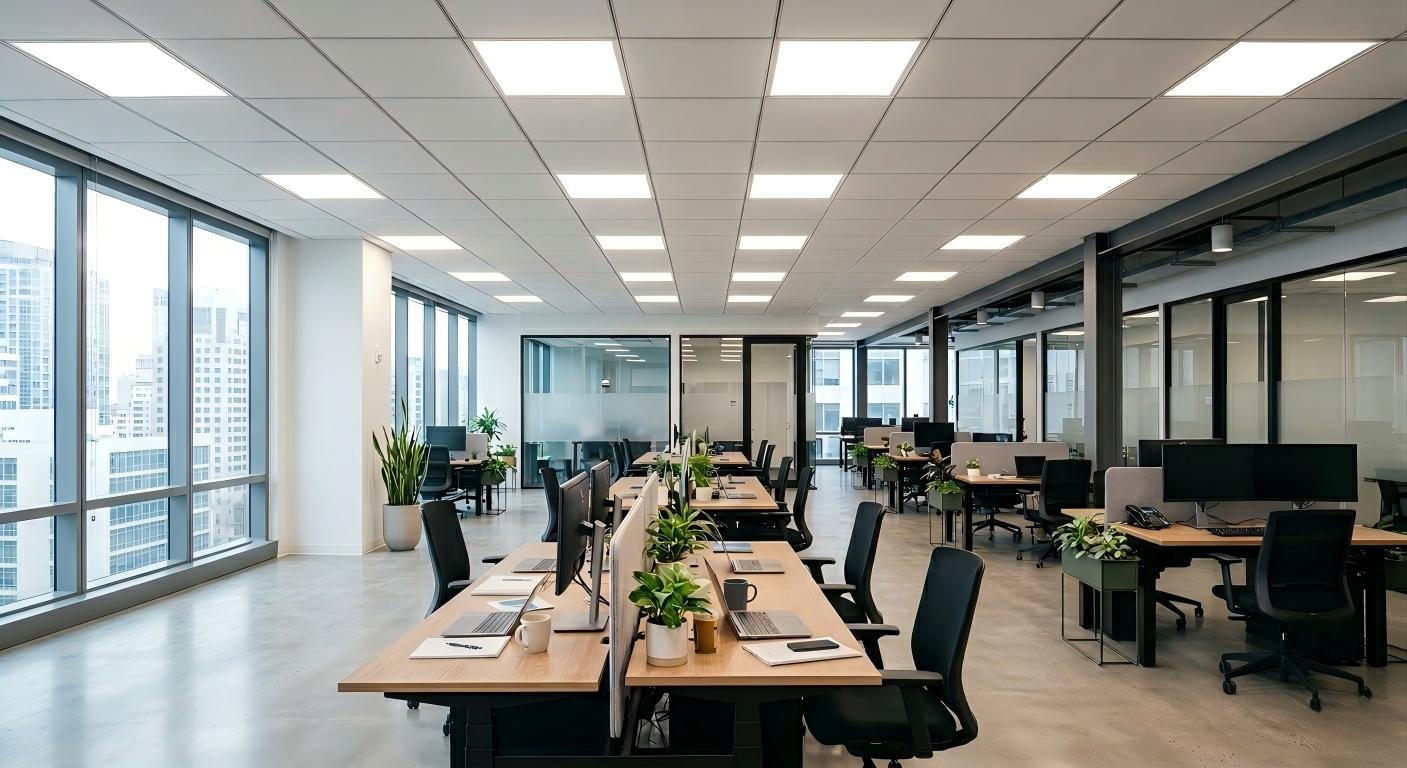
Areas requiring concentration or precise tasks—such as kitchens, home offices, and workstations—demand significantly higher brightness levels. We recommend that work surfaces and reading areas reach 300–500 lumens per square meter to ensure clear visibility and minimize eye strain. Insufficient lighting in work environments is not only inconvenient but can also cause chronic damage to eyesight over time.
- Professional and Precision Scenarios: High Brightness, High Color Rendering
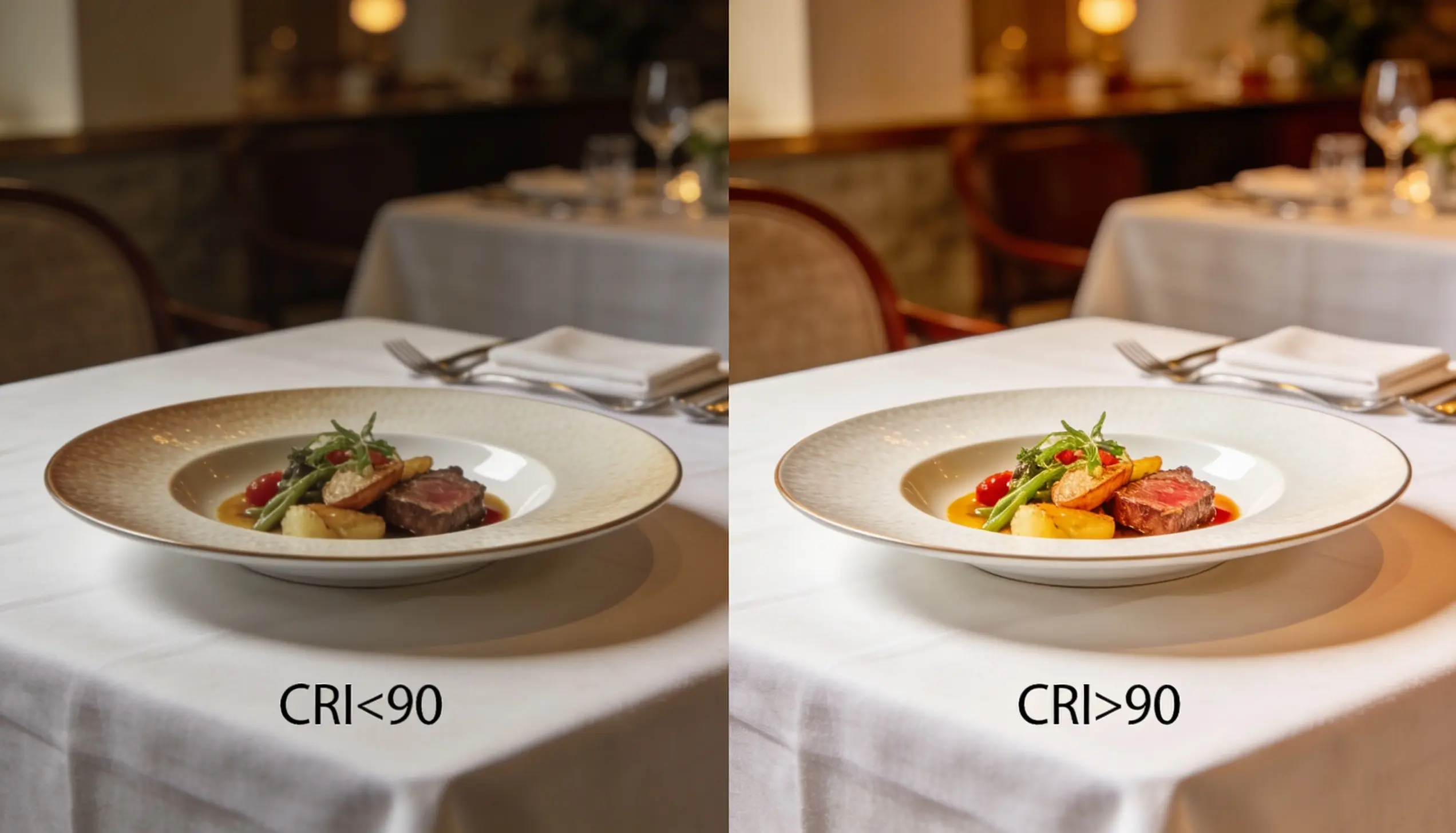
Areas such as makeup mirrors, craft workbenches, and medical or artistic work environments require not only sufficient brightness (500 lumens or more) but also high color rendering. Only light that closely resembles natural light can accurately reproduce color details and prevent misjudgments.
- Outdoor and Public Spaces—Safety First, with Atmosphere in Mind
In outdoor areas such as porches, driveways, and courtyards, the primary goal of lighting is to ensure safety and improve visibility. Therefore, it is generally recommended that brightness be no less than 50 to 100 lumens per square meter. For key areas such as steps and entrances, brightness can be appropriately increased. If you also wish to create a pleasant landscape ambiance, you can use warm-toned lighting fixtures with a low color temperature. This ensures safety while also enhancing aesthetics.
Of course, the figures above are for reference only. When selecting lighting fixtures, adjustments should be made based on room size, ceiling height, wall color, and individual visual sensitivity. Remember, good lighting is not about being as bright as possible, but about striking the right balance.
Frequently Asked Questions About Lumens in Lighting
Q1: How many lumens do I need for my room?
It depends on the size of the room and how you use it. A cozy bedroom might only need 1,000–2,000 lumens for a relaxed atmosphere, while a kitchen or home office — where you need clear, focused light — can call for 3,000–5,000 lumens or more. A simple rule of thumb: the more detail-oriented the task, the more lumens you need.
Q2: Does a higher wattage mean a brighter light bulb?
No. Contrary to popular belief, a higher wattage does not necessarily mean a brighter light. Wattage essentially measures a light fixture’s power consumption, not its brightness. The unit that truly reflects brightness is the lumen. A more scientific approach to selecting lighting fixtures is to first determine the required lumen output based on the intended use and then choose a product that achieves that brightness using less power. This ensures adequate brightness while saving energy.
Q3: What's the difference between lumens and watts in lighting?
Watts tell you how much electricity a bulb consumes; lumens tell you how much light it actually produces. In the LED era, a bulb can deliver 800 lumens while using as little as 8–10 watts — the same brightness that once required a 60W incandescent. Always shop by lumens when you want to know how bright a light will be.
Q4: How many lumens make a good LED bulb?
For general home use, a good LED bulb typically falls in the range of 450–1,600 lumens, depending on the application. A bedside lamp might sit around 450–800 lm, while a ceiling fixture meant to light an entire room should comfortably exceed 1,000 lm. Beyond the number, also check the beam angle and color temperature — they shape how that light actually feels in your space.
Q5: Can I dim the lumens of a light fixture?
Yes — but only if both the bulb and the fixture are rated as dimmable. Most modern LED bulbs support dimming, which effectively reduces lumen output and lets you adjust brightness to suit the moment. Just make sure your dimmer switch is compatible with LED technology, as older dimmer models designed for incandescent bulbs can cause flickering or buzzing with LEDs.
Q6: Will lumens affect a fixture's energy consumption?
Not directly — but the two are closely related. What matters is luminous efficacy: the ratio of lumens produced per watt consumed (lm/W). A bulb with high efficacy delivers more light for less electricity. Modern LEDs typically achieve 80–120 lm/W, making them far more efficient than incandescent or halogen alternatives. When comparing bulbs, a higher lm/W means you're getting more brightness without paying more on your energy bill.