


What is a Pendant Light?
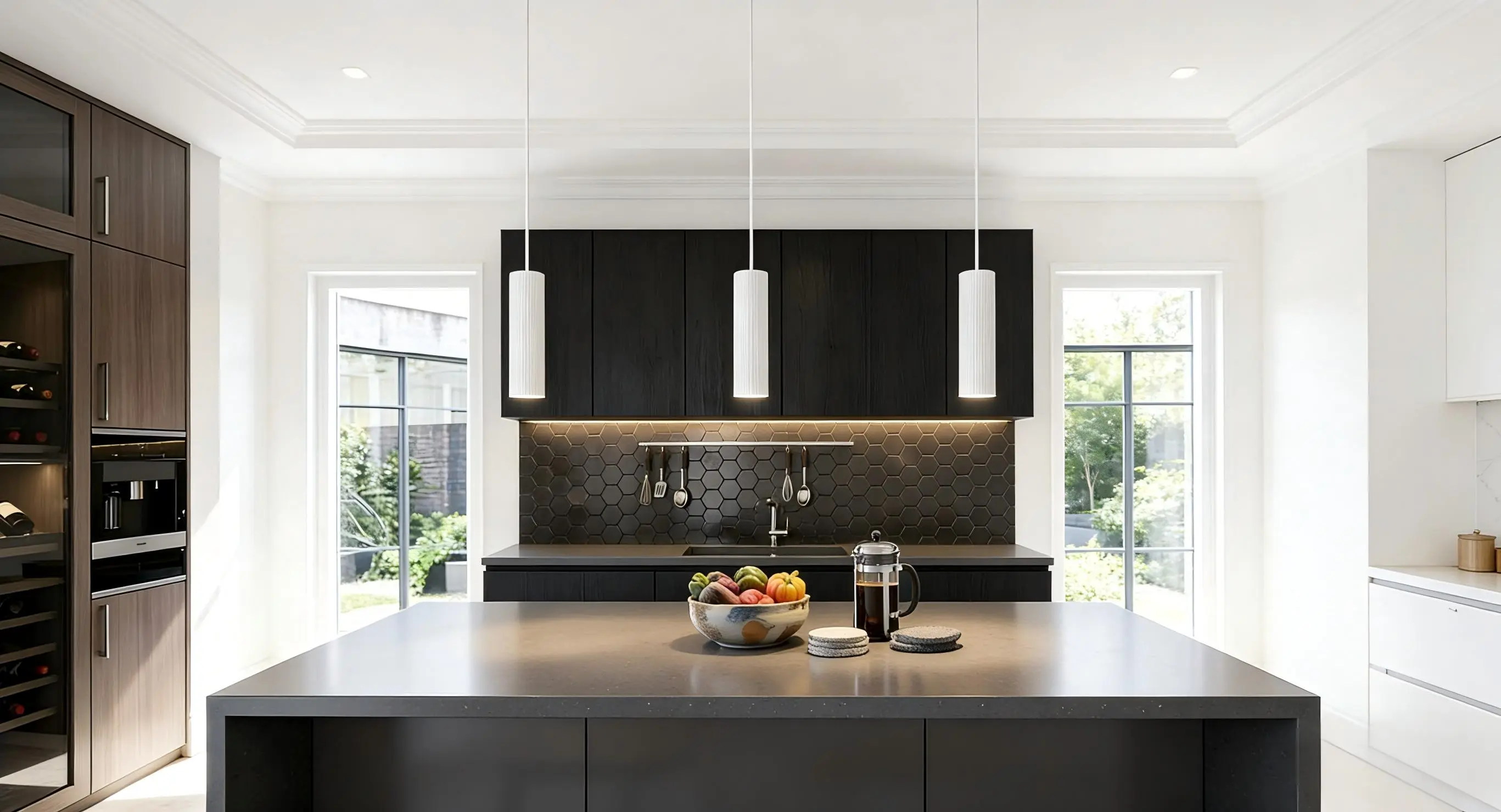
A pendant light is a ceiling fixture suspended from above by a cord, chain, or rod, casting focused light downward from a single shade or bulb, in contrast to the sprawling arms of a chandelier. That directness is precisely what makes it so useful: whether positioned over a kitchen island, a dining table, a bedside nook, or a hallway, it delivers light exactly where it's needed.
Beyond function, pendants have earned their place as a design staple, available in styles ranging from spare minimalist forms to warm industrial silhouettes, they work equally well in compact apartments and open-plan homes. It's this combination of purposeful lighting and effortless visual impact that has made the pendant light one of the most enduring fixtures in contemporary interiors.
What is a Chandelier?
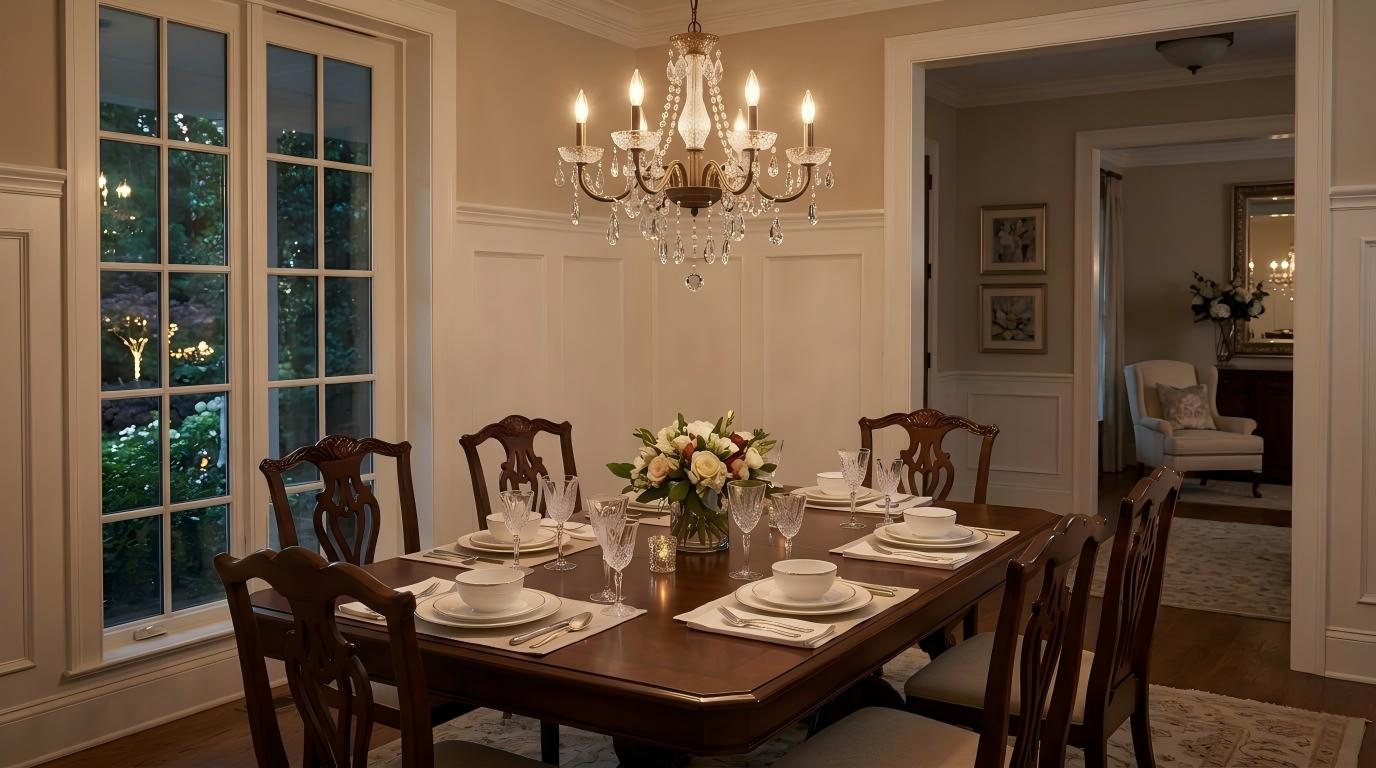
A chandelier is a type of suspended light fixture composed of multiple light bulbs or candles. Mounted to the ceiling, it features multiple arms extending downward to form an elegant, tree-like shape, providing soft ambient lighting for a space. It is commonly found in dining rooms, living rooms, and hotel lobbies.
The term “chandelier” originates from the Latin word candelabrum, meaning “candlestick.” In the days before electricity was widely available, chandeliers used candles as their light source and were a luxury lighting item reserved exclusively for the nobility and the wealthy. At that time, having a magnificent chandelier hanging in one’s home was not only a symbol of wealth but also a reflection of social status.
With the rise of the Industrial Revolution and the widespread adoption of electricity, chandeliers gradually became accessible to ordinary households. Their materials and styles also grew increasingly diverse, ranging from ornate crystal chandeliers to sleek, minimalist designs crafted from modern metals.
Key Differences Between Pendant and Chandelier
Light Source Configuration
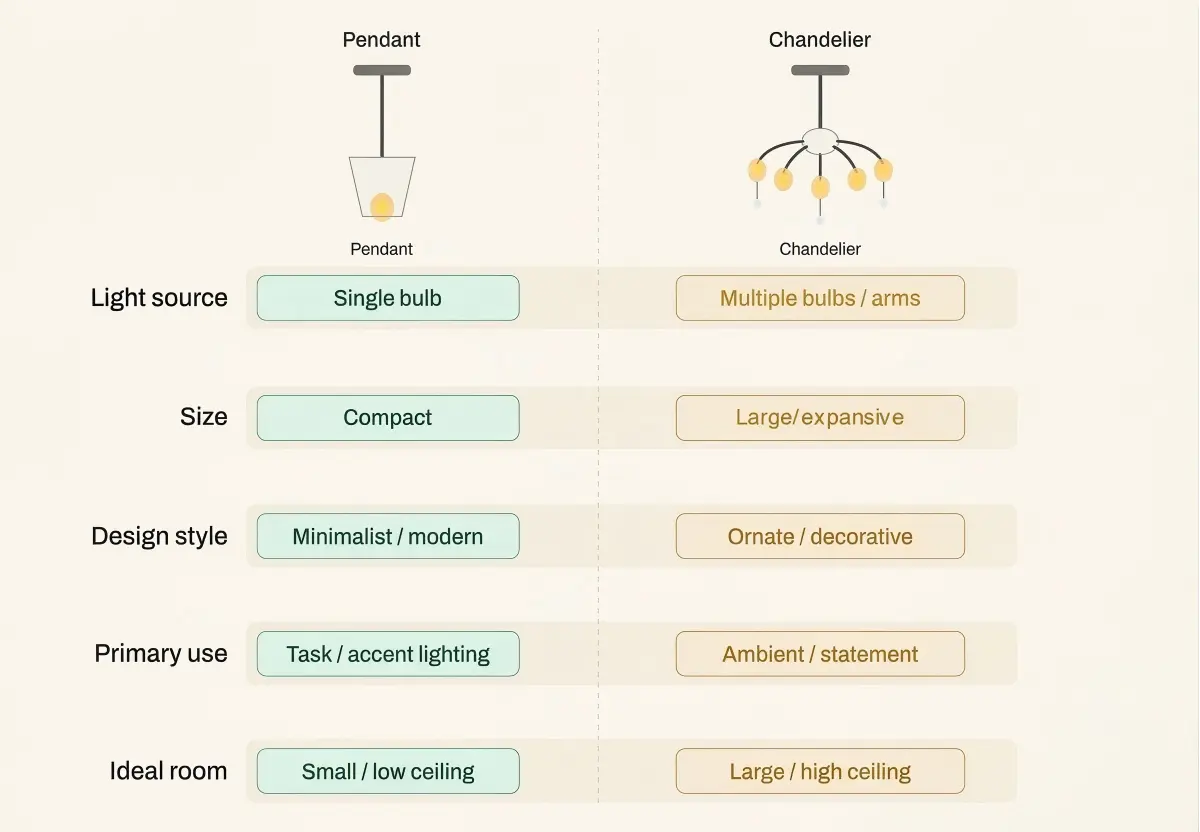
The main difference between pendant lights and chandeliers lies in the number of light sources and the way the light is distributed.
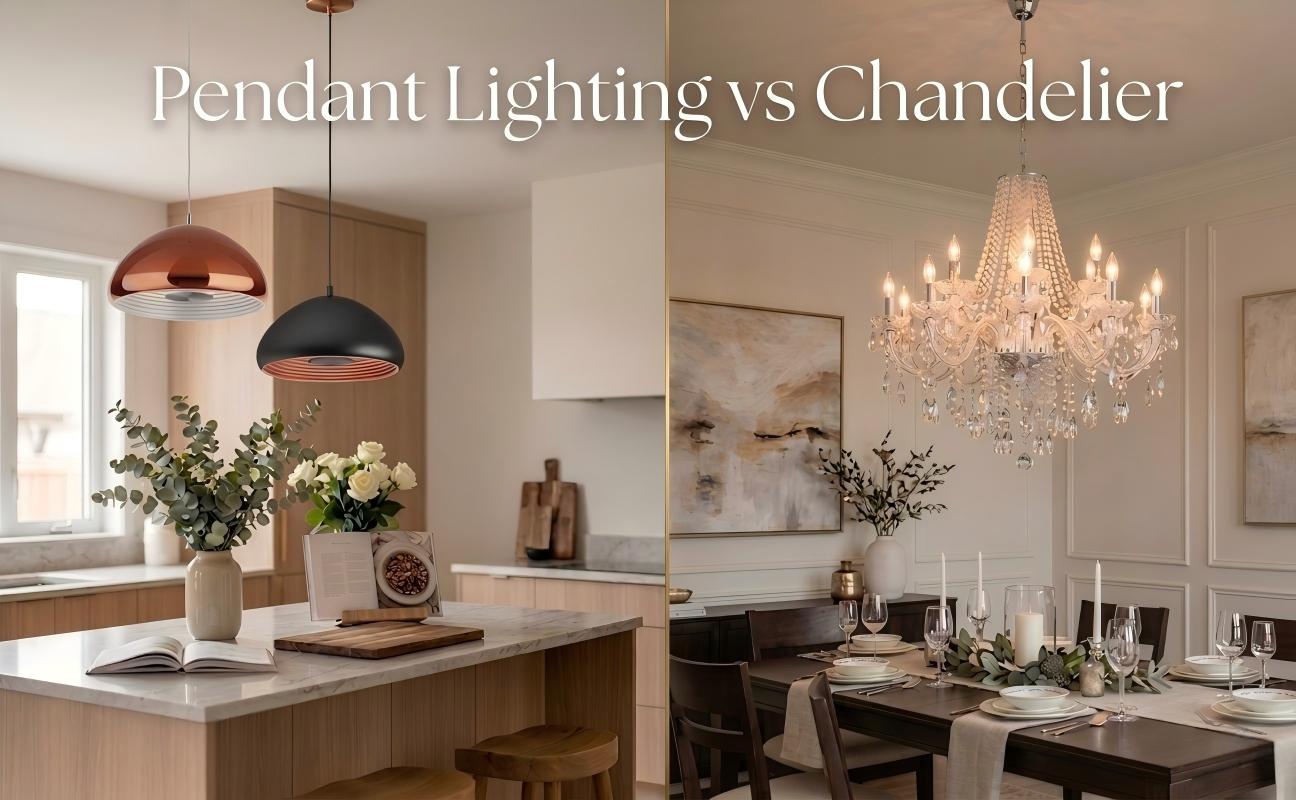
A pendant light typically features a single light source. Its defining characteristic is that it hangs down from the ceiling, directing light straight downwards to provide clear, focused illumination. As the light is concentrated rather than diffused widely, it can highlight specific areas precisely, such as dining tables, kitchen countertops, bedrooms or some commercial spaces.
A chandelier, by contrast, usually consists of multiple bulbs and light sources. With several arms extending outward, each holding its own light source, the fixture allows light to radiate in multiple directions. This design spreads illumination more evenly across the room, creating a warm, layered ambient lighting effect that fills the entire space.
Fixture Size and Scale
Pendant lights feature a compact design and simple construction, taking up very little visual space, so they are not particularly demanding in terms of installation requirements. A single pendant light hangs cleanly and neatly, while multiple lights arranged as a group do not appear cluttered, offering exceptional flexibility. For homeowners with limited space who still seek a sense of design, pendant lights are an ideal choice.
Chandeliers, on the other hand, are quite different. They are typically larger in scale, mainly due to their structural design. From a central body, multiple arms extend outward, with a light bulb positioned at the end of each arm. This outward-spreading structure naturally increases the fixture’s overall size and gives it a strong visual presence. Because of this, chandeliers usually require a more spacious room and sufficient ceiling height to look balanced. Placing a large chandelier in a small room with a low ceiling can easily make the space feel crowded and visually disproportionate.
Design Style and Aesthetic
Pendant lights typically feature a clean and modern design style. Due to their simple form, they can enhance a space by adding depth and visual interest, whether used individually or arranged in groups. This flexibility makes pendant lighting a practical and stylish decorative lighting choice for a wide range of interiors. Today, many pendant light styles are available on the market, including single pendants, mini pendants, multi-light pendants, drum and globe pendants, and linear pendant lights, among others.
In contrast, chandeliers tend to be more ornate and decorative in style. Traditional chandeliers typically feature crystal, glass, or metalwork, with intricate and aesthetically pleasing designs that serve as visual focal points in a space. Even modern-style chandeliers often enhance a space’s character through unique structures or artistic forms. Therefore, the strength of a chandelier lies in its strong decorative quality, which elevates the overall atmosphere and sophistication of a space.
Primary Lighting Purpose
Pendant lights are typically used for task lighting or accent lighting. Because they hang low and cast light primarily downward, they can precisely illuminate specific areas, such as dining tables, kitchen islands, bars, or reading nooks. This type of lighting effectively increases brightness in specific areas, making the functional zones of a space more distinct. As a result, pendant lights are ideal for living spaces that require task lighting.
However, chandeliers primarily serve as ambient lighting, With multiple light sources distributed across their outward-extending arms, they scatter light simultaneously in all directions, illuminating the entire space evenly and creating a warm, enveloping glow throughout the room. Beyond their lighting function, chandeliers also impress with their remarkable versatility in design. From opulent crystal arrangements and elegant vintage-inspired European styles to clean-lined contemporary geometric forms, there is a chandelier to complement virtually different interior aesthetic, making it the ultimate statement piece for different space.
Best Room Applications
Pendant lights work best in spaces where focused or task lighting is needed. They are commonly installed above kitchen islands, dining tables, breakfast bars, and reading corners, where their downward light can clearly illuminate a specific area. Because pendant lights are usually compact and hang at a lower height, they provide precise lighting without taking up much visual space. This makes them especially suitable for smaller rooms or areas where both functionality and style are important.
Chandeliers are best suited for spaces where both lighting and visual impact are important. They work particularly well in formal dining rooms, grand entryways, high-ceiling living rooms, and master bedrooms. With multiple light sources spreading illumination throughout the room, chandeliers can provide warm ambient lighting while also acting as a striking centerpiece. Their decorative design helps elevate the atmosphere, making the space feel more refined, welcoming, and visually impressive.
Cost Comparison
When it comes to cost, pendant lights and chandeliers can vary significantly due to their design complexity and size. Pendant lights are generally more affordable because they usually feature a simpler structure and fewer components, often with just a single light source. This makes them a budget-friendly option for everyday lighting needs, especially when used individually or in small groups.
Chandeliers generally come with a higher price tag than pendant lights. Their larger size, multiple light sources, and more intricate construction—often featuring materials such as crystal, glass, or decorative metal—naturally increase the overall cost. In many interiors, a chandelier serves not only as a lighting fixture but also as a statement lighting piece, adding elegance and visual impact to the room. For this reason, chandeliers are often considered both a functional light source and a decorative centerpiece, which contributes to their higher price.
Buying Guide: How to Choose the Right One
1. Start With Your Room's Purpose
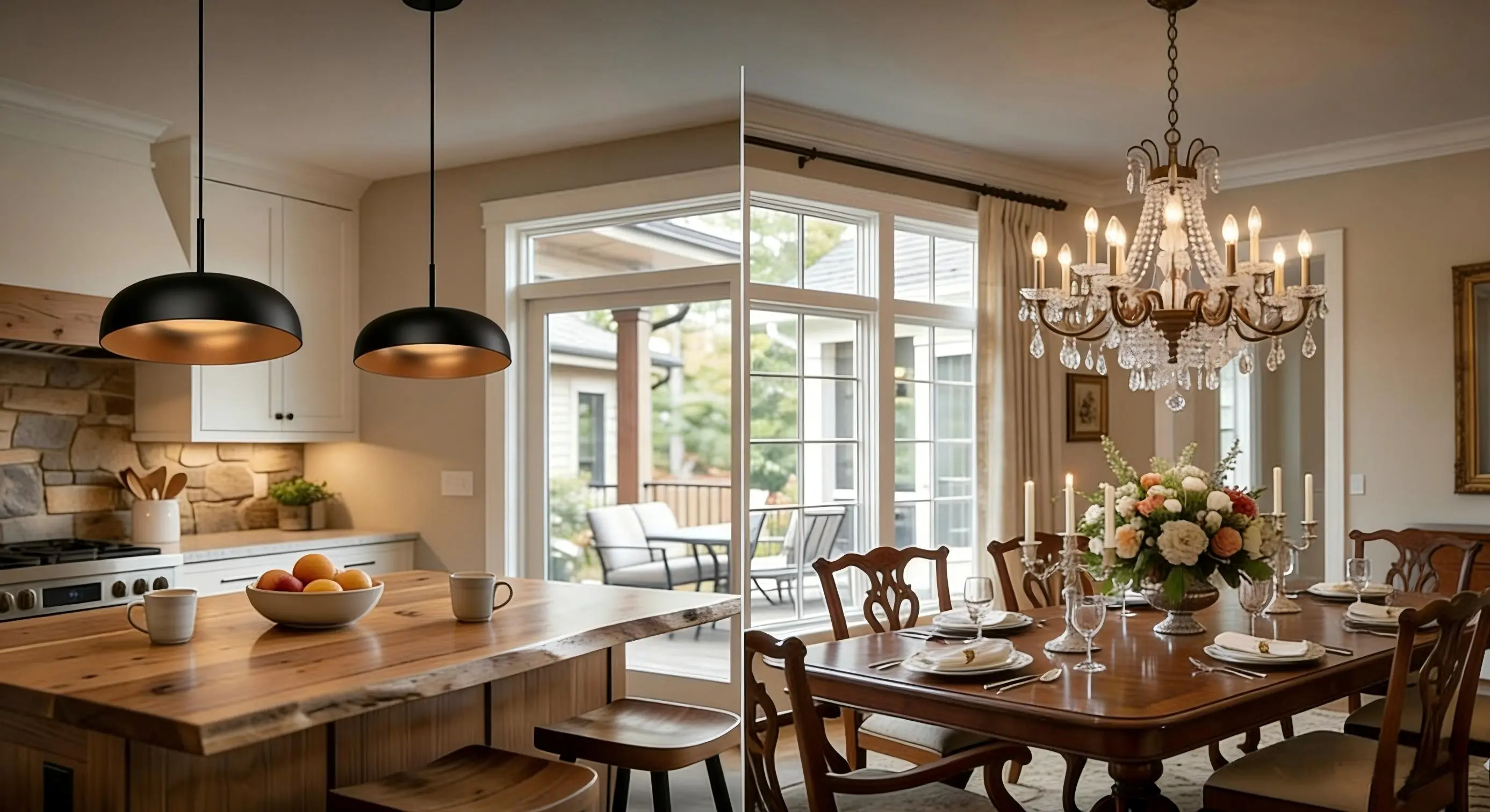
Before anything else, ask yourself: what do I need this light to do? If you need focused, functional lighting over a kitchen island, dining nook, or work surface, a pendant is your best bet. If you want to create a dramatic ambient atmosphere in a formal dining room, grand entryway, or spacious living room, a chandelier will serve you far better.
2. Measure Your Ceiling Height First
This is a non-negotiable step. Pendant lights are flexible and work comfortably with standard ceiling heights of 8–9 feet. Chandeliers, however, require a minimum of 9–10 feet to hang safely and look proportionally correct. For every additional foot of ceiling height beyond 9 feet, consider adding roughly 3 inches to the chandelier's drop length.
3. Match the Scale to Your Room Size
A common mistake is choosing a fixture that is too small or too large for the space. For chandeliers, a simple rule of thumb is to add your room's length and width in feet — the sum in inches gives you a ideal chandelier diameter. For pendants over a kitchen island, allow one pendant for every 2 feet of island length for a balanced, proportional look.
4. Define Your Interior Style
Your light fixture should feel like a natural extension of your existing décor. Sleek, geometric pendants suit modern, Scandinavian, or industrial interiors. Ornate crystal or candle-style chandeliers complement traditional, French country, or glam aesthetics. Mid-century globe pendants and brass chandeliers bridge the gap beautifully for transitional spaces.
5. Set a Realistic Budget
Factor in not just the purchase price but also installation costs, potential ceiling reinforcement for heavier chandeliers, and long-term maintenance. Pendants offer excellent style at a lower overall investment. Chandeliers require a bigger budget but deliver a stronger design impact and potential uplift in property value.
6. Consider the Bulb Type and Light Quality
Think about the warmth and quality of light you want. Edison-style bulbs in pendants create a warm, intimate glow. Crystal chandeliers with LED bulbs produce brilliant, sparkling light that fills a large room. Always check the fixture's recommended bulb wattage and opt for dimmable options where possible — being able to control light intensity dramatically improves ambiance.
7. Don't Overlook Practicality
Consider how easy the fixture will be to clean and maintain. A simple three-bulb pendant is effortless to upkeep. An elaborate 12-arm crystal chandelier requires regular, careful cleaning to keep it looking its best. If low maintenance is important to you, opt for simpler designs in both categories.
The Bottom Line
Choosing between a pendant and a chandelier ultimately comes down to four key factors: room function, ceiling height, design style, and budget. When all four align with your chosen fixture, the result is a space that feels intentional, beautifully lit, and effortlessly pulled together.
At UPSHINE Lighting, we believe that great lighting should never be a compromise. As a professional LED lighting manufacturer, we offer a curated range of high-quality LED pendant lights designed to suit every space, style, and budget, from sleek minimalist designs perfect for modern kitchens, to warm, elegant options that elevate any dining or living area. If you're currently on the hunt for the perfect pendant light for your space, feel free to reach out to the UPSHINE Lighting team. We're here to help you find the ideal fit, every step of the way.