


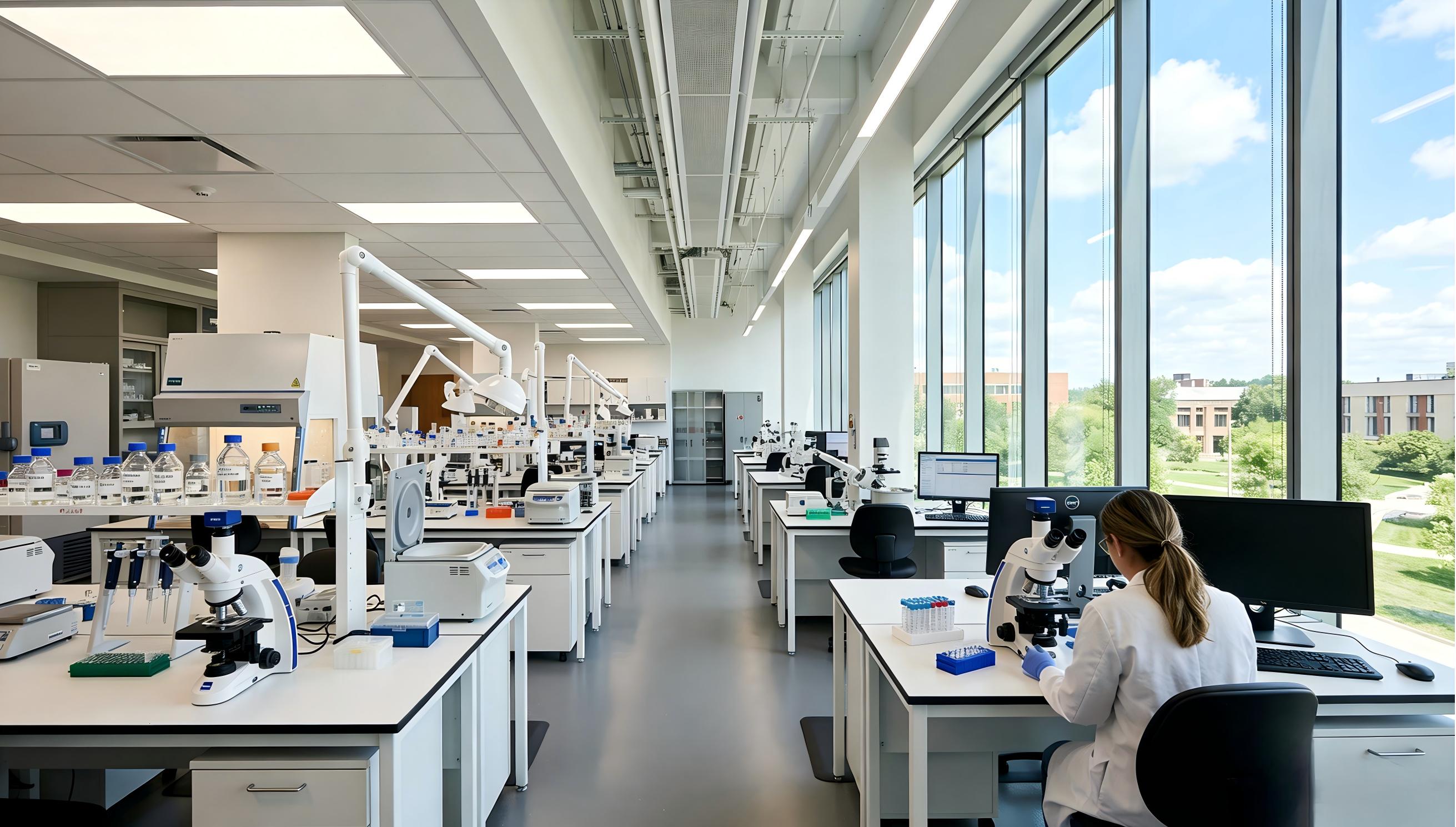
As global technology advances rapidly, laboratories, which are at the heart of scientific innovation, are being held to increasingly high infrastructure standards. The rapid expansion of areas such as medical diagnostics, biotechnology research and pharmaceutical manufacturing has created a greater demand for laboratory environments. In this context, lighting is just as important as other key elements in laboratory design.
Lighting is a key factor influencing human circadian rhythms and overall well-being, making it especially important in laboratory settings. Well-designed lighting can significantly enhance researchers’ alertness and concentration, helping ensure the accuracy, quality, and efficiency of their work. Studies have shown that scientifically designed, eye-friendly lighting is an essential element in improving overall laboratory performance.
Among all lighting options, LED lighting has become the first choice for modern laboratories due to its stability, efficiency and adaptability. So what makes the best LED lighting for modern laboratories? In this blog, we will walk you through the key factors you need to consider.
Why Proper Lab Lighting Makes All the Difference?
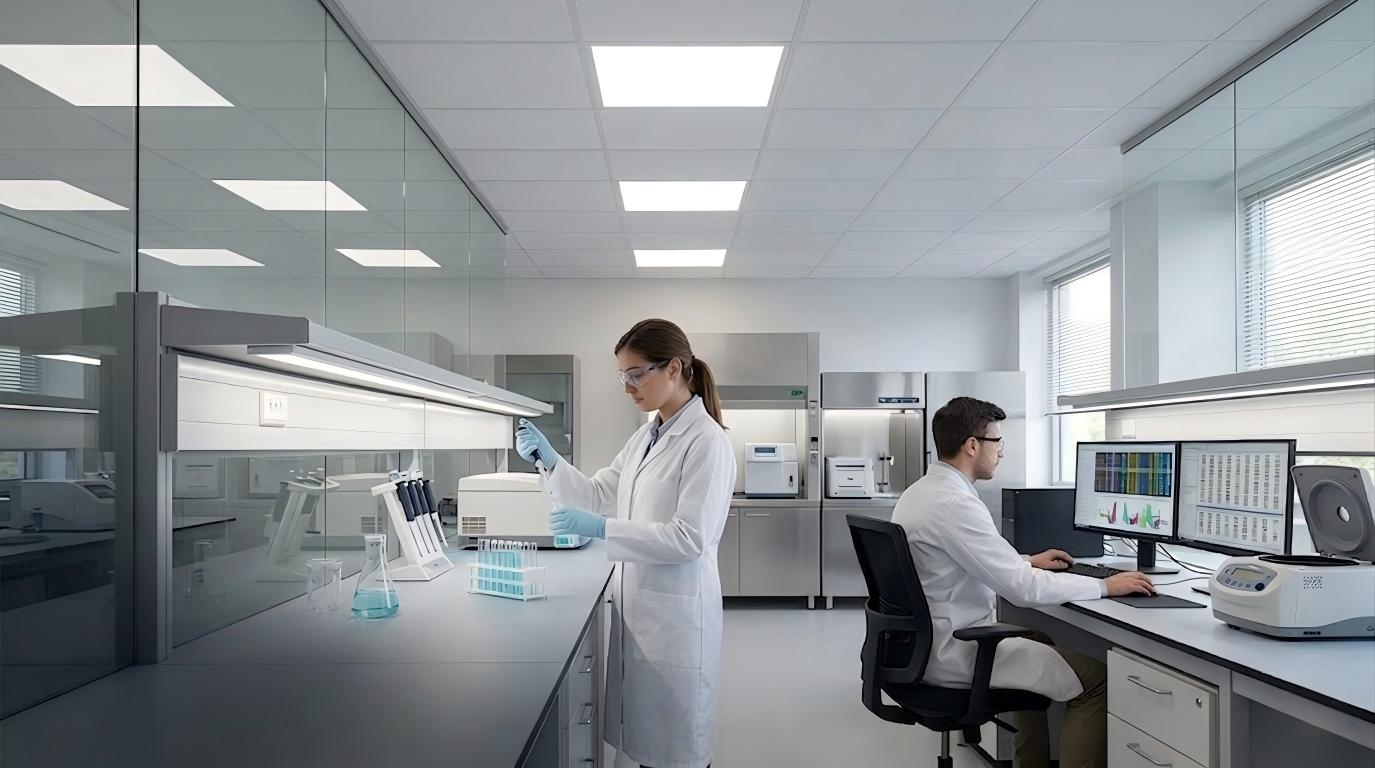
For optimal laboratory performance, professionals prioritize equipment, protocols, and materials — and they should also emphasize one critical, impactful factor: lighting. High-quality lighting in a laboratory environment directly enhances experimental accuracy, boosts staff wellbeing, and drives overall lab efficiency. Here are several reasons why proper lab lighting is essential to achieving peak laboratory performance.
- Greater Visual Accuracy in Lab Work
In laboratory environments, accurately identifying fine details and true colors is essential for reliable results. High-quality LED lighting with a Color Rendering Index (CRI) of 90 or above ensures that samples, specimens, and color-coded reagents appear as they truly are, eliminating the risk of misidentification caused by distorted or artificial color rendering.
According to the Illuminating Engineering Society (IES), high-CRI lighting supports better performance in color-critical tasks. In fields such as pathology, histology, and pharmaceutical quality control, this level of visual clarity plays a vital role in maintaining consistency, quality, and overall research integrity.
- Boosting Focus and Workplace Productivity
Proper lighting plays a crucial role in reducing eye strain, allowing researchers to maintain sharp, clear vision even during extended work sessions. When the eyes are comfortable, distractions caused by squinting or visual fatigue simply fade away, letting scientists stay locked in on what matters most.
Beyond comfort, consistent and evenly distributed light makes a tangible difference in accuracy. Whether identifying delicate specimens under a microscope or reading precise instrument data, proper illumination minimizes the risk of human error and keeps workflow running smoothly.
Perhaps most importantly, cool white light in the 5000–6500K color temperature range closely mimics natural daylight. This subtle yet powerful quality helps regulate the body's circadian rhythm, keeping the mind alert and focused throughout the day and ultimately stretching those peak productivity hours well into a long shift.
- Safer Operations with Fewer Errors
In a laboratory environment, precision and safety are always top priorities, as even the slightest visual deviation can lead to serious consequences. Therefore, the quality of lighting is far from trivial; it directly impacts the performance and safety of every researcher.
Proper and sufficient lighting fundamentally establishes a visual safeguard for the laboratory. Evenly distributed light eliminates shadows and dark spots on work surfaces, allowing researchers to clearly identify sample shapes, accurately read instrument data, and quickly detect potential hazards. This ensures that every operation is carried out steadily under controlled and visible conditions.
LED vs. Fluorescent Lab Lighting: A Direct Comparison
Choosing the right lighting for your lab is not just a technical decision; it affects safety, productivity, and long-term costs. The table below breaks it down clearly.
| Category | LED | Fluorescent |
|---|---|---|
| Energy Use | Up to 50% more efficient | Higher power consumption |
| Lifespan | 50,000+ hours | 7,000–15,000 hours |
| Light Quality | Flicker-free, high CRI | Prone to flickering, moderate CRI |
| Heat Output | Minimal | Moderate to high |
| Maintenance | Low — rare replacement | High — frequent bulb changes |
| Upfront Cost | Higher | Lower |
| Long-Term Cost | Lower | Higher |
| Safety | No toxic materials | Contains mercury |
Shock Resistance |
Solid-state, impact-resistant | Fragile tubes, hazardous breakage risk |
| Eco-Friendliness | Environmentally safe | Requires special disposal |
| Best Suited For | Modern, high-performance labs | Short-term or budget setups |
Laboratory Lighting Standards & Key Requirements
According to relevant standards and regulations, the lighting requirements for science classrooms and laboratories are based on the workbench as the reference plane, ensuring an average illuminance of no less than 300lx to provide sufficient light for the work area. The unified glare rating (UGR) must be controlled to UGR ≤ 19 to effectively reduce glare and protect the visual comfort of researchers. The color rendering index (CRI) should reach Ra ≥ 80 to ensure accurate color reproduction of samples, supporting precise experimental judgment and operations.
Different areas of a laboratory serve various functions, so their lighting requirements naturally vary. Specifically, these can be divided into the following categories:
- Experimental Operation Area
The experimental operation area is the core zone where researchers conduct experiments. Lighting here must be bright and even to ensure all samples and instruments are clearly visible. Typically, the lighting in this area should provide an illuminance of no less than 300lx to support precise operations. Meanwhile, the lighting should have a good color temperature and color rendering index (Ra ≥ 80) to ensure accurate color reproduction of samples, avoiding errors caused by insufficient or distorted light.
- Analysis and Observation Area
The analysis and observation area is where researchers observe experimental results and analyze data. This area requires higher lighting standards, especially for tasks that demand high contrast and fine detail recognition. Generally, the lighting in this area should provide at least 500lx of illuminance and minimize glare (UGR ≤ 19) that could impair vision. The lighting should also have a high color rendering index to help researchers make accurate judgments of experimental results.
- Storage and Equipment Area
The storage and equipment area is mainly for storing reagents, instruments, and lab equipment. Although the lighting requirements are relatively lower here, sufficient brightness is still necessary to ensure safe access to items. The illuminance in this area should generally not be below 200lx, to prevent items from being unclear due to insufficient light, reducing the risk of difficulties in retrieving or misplacing equipment.
- Flammable and Explosive Areas
In areas where flammable gases or explosive substances are present, the lighting fixtures must meet strict explosion-proof standards to avoid the risk of fire or explosion due to electrical malfunctions or overheating. To minimize the impact on the environment, low-heat, stable-power lighting fixtures should be chosen to reduce the temperature of the lights themselves, thus further lowering the fire hazard. Explosion-proof lights usually have a sealed design that effectively isolates dangerous substances and provides stable, safe illumination.
- Damp Areas
Damp areas, where humidity is high, pose a risk to electrical insulation, increasing the chance of short circuits or electrical failures. Therefore, lighting in these areas must be specially designed to be waterproof and dustproof. To prevent water vapor or dust from entering the fixtures and causing damage or safety hazards, lights that meet waterproof and dustproof standards, such as IP65 or higher, should be used. Additionally, considering the corrosion risks in humid environments, the lighting fixtures should be made from corrosion-resistant materials to ensure long-term safety and durability.
- Hallways and Passageways
Lighting in hallways and passageways primarily ensures the safe movement of laboratory personnel. While the lighting requirements are not as high, it must provide uniform lighting to avoid shadows or dark spots, reducing the risk of accidents due to insufficient lighting. Generally, the lighting in this area should not be lower than 150lx, and care should be taken to avoid strong light reflections or glare.
- Emergency Areas
Safety and emergency areas in the laboratory, such as emergency exits, fire extinguisher locations, and first aid equipment, have particularly critical lighting needs. The lighting in these areas must remain visible in emergencies and meet safety standards to provide clear guidance in the event of a fire, leakage, or other unforeseen circumstances. Typically, the illuminance in these areas should not be below 100lx, and emergency lighting systems should be installed to ensure sufficient illumination even during power outages.
What Type of Lighting Is Best for Laboratories?
What types of lighting are best suited for laboratory environments? Laboratories have unique lighting needs based on the size, shape, and function of each area. Beyond basic lighting requirements, there are several LED lighting options designed to meet these specific needs, including LED panel lights, LED linear lights,under-cabinet lights, and more.
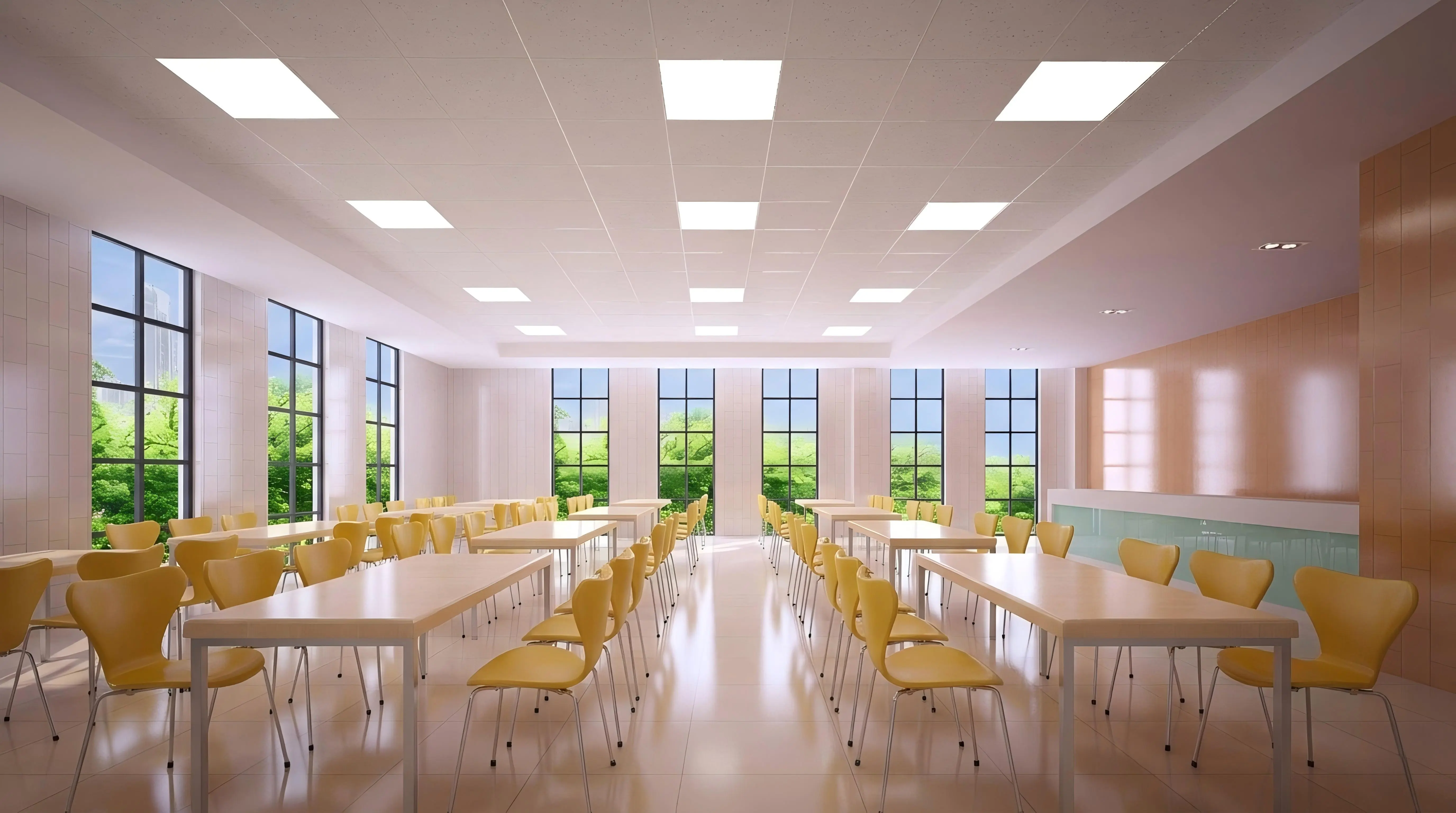
LED panel lights are a popular choice for laboratory spaces due to their sleek, thin, and flat design. These lights can be seamlessly integrated into ceilings or walls, providing even and uniform illumination. Their compact design makes them ideal for areas that require consistent, bright light without the bulk of traditional lighting fixtures. LED Panel lights are especially useful in general workspaces where overhead lighting is needed across a broad area, ensuring clear visibility for tasks such as data recording, sample analysis, and reading equipment.
LED linear lights are ideal for laboratory lighting due to their long, thin design, which allows for efficient illumination of elongated spaces like workbenches, countertops, and aisles. These lights provide even, shadow-free lighting, ensuring clear visibility for precise tasks. Featuring flexible installation via mounting clips or suspension kits, they can be easily mounted on ceilings or walls, making them highly versatile for diverse laboratory layouts.
Under-cabinet lights are essential in laboratory settings where counter space is used for experiments and handling sensitive equipment. These lights are mounted underneath cabinets or shelves and provide focused, shadow-free light on work surfaces. They ensure that researchers can clearly see the materials they are working with, which is especially important for tasks that require accuracy, such as mixing chemicals or reading fine print on instruments
- LED Floodlights
For labs that require external or perimeter lighting, floodlights are an excellent option. These lights provide broad, intense illumination, making them ideal for lighting up outdoor spaces, emergency exits, or the lab's exterior areas. Floodlights ensure that the lab is well-lit even during nighttime hours, providing both security and visibility in the surrounding environment.
Things to Consider When Installing Laboratory Lighting
When installing laboratory lighting, it is essential to ensure that the setup meets safety and functionality requirements. Proper lighting enhances visibility, supports accurate research and protects the well-being of laboratory workers. The following five factors should be considered during the installation process:
- Illuminance Levels
It is important to ensure that the lighting provides sufficient brightness for all areas, with an average illuminance of at least 300 lux for workspaces. Specialised areas, such as analysis or observation zones, may require higher levels of illumination, such as 500 lx or more, to perform precise tasks.
- Lighting Distribution
Uniform lighting is crucial in laboratories to avoid shadows and dark spots. Proper distribution helps prevent eye strain and ensures that all work areas, including countertops and workbenches, are adequately lit for precise tasks.
- Color Temperature and Color Rendering
To ensure that samples and materials are illuminated realistically, choose an appropriate colour temperature (typically 5000–6500 K) and a high colour rendering index (Ra ≥ 80). This will help you to accurately observe and analyse the experimental results.
- Glare Control
You can keep glare to a minimum by choosing fixtures with a low unified glare rating (UGR ≤ 19). Excessive glare can cause eye discomfort, reduce focus and potentially lead to errors when carrying out delicate tasks.
- Safety and Compliance
It is vital to comply with safety standards for electrical installations and to choose lighting fixtures that are certified for the laboratory environment. In hazardous or damp areas, use explosion-proof or waterproof lights to ensure worker safety.
Conclusion
Proper laboratory lighting is essential for creating a safe, efficient and productive environment. Adequate illuminance, uniform light distribution and glare control enhance both the accuracy of experiments and the comfort of laboratory staff. Additionally, selecting the appropriate colour temperature and adhering to safety standards is essential for maintaining optimal research conditions.
At UPSHINE Lighting, we understand the importance of customised lighting solutions for laboratories. Our range of high-performance, energy-efficient lighting fixtures, including panel lights, linear lights, are designed to meet the specific needs of various laboratory environments. Focusing on durability, safety and optimal light quality, UPSHINE Lighting provides perfect lighting solutions to support your laboratory's success.
Lab Lighting FAQs
- What is the recommended lux level for laboratory lighting?
The required illuminance varies depending on the type of work being performed. General laboratory areas typically require a minimum of 500 lux, while highly detailed tasks such as microscopy, sample analysis, and surgical preparation demand 750 lux or above. These benchmarks are defined by the European standard EN 12464-1 and are widely adopted across international laboratory design guidelines.
- What color temperature is best for lab environments?
For most laboratory applications, a color temperature between 4000K and 5000K is considered optimal. This range closely mimics natural daylight, supporting visual clarity, alertness, and accurate color perception during extended working hours. In clinical and pharmaceutical settings where color differentiation is critical, a higher CRI value of 90 or above should be prioritized alongside the appropriate color temperature.
- Are LED lights suitable for cleanrooms?
Absolutely. LED lighting is in fact the preferred choice for cleanroom environments due to its sealed construction, minimal heat emission, and compatibility with strict contamination control requirements. UPSHINE Lighting offers a dedicated range of cleanroom LED fixtures designed with smooth, easy-to-clean surfaces, high IP ratings, and flicker-free performance — fully compliant with ISO cleanroom classifications.
- What certifications should lab LED lights have?
Laboratory LED lighting should carry internationally recognized certifications including CE, UL, DLC, and RoHS to ensure product safety, energy performance, and environmental compliance. Depending on the application, additional certifications such as ATEX for explosion-proof environments may also be required. Always verify that your supplier can provide full documentation before purchasing.
- How does improper lighting affect lab results?
Poor lighting is one of the most underestimated sources of error in laboratory work. Insufficient illuminance, low CRI values, and flickering light sources can all compromise a researcher's ability to accurately read measurements, identify color changes, or detect specimen details. Over time, these conditions also contribute to eye fatigue and reduced concentration — both of which increase the likelihood of procedural mistakes and data inaccuracies.
- Can lab lighting be integrated with smart control systems?
Yes. Modern LED laboratory lighting is fully compatible with smart building management systems, supporting features such as occupancy sensing, daylight harvesting, and programmable dimming schedules. These intelligent controls not only enhance energy efficiency but also allow lighting conditions to be precisely adjusted for different tasks and work zones throughout the facility.
- How do I choose the right LED lighting supplier for my laboratory?
Beyond product specifications, choosing the right supplier means partnering with a company that understands the unique demands of laboratory environments. Look for suppliers with proven industry experience, the ability to provide customized lighting solutions, and strong after-sales technical support. UPSHINE Lighting has delivered tailored LED lighting solutions to laboratories across the pharmaceutical, medical, and research sectors worldwide — combining international compliance standards with project-specific design expertise to ensure every installation performs at its best.