



Would you like your living room to be both comfortable and atmospheric? Many people make the mistake of installing just one main light fitting when decorating, which often results in lighting that is either too bright or too dim, leaving the space feeling incomplete. This is usually not a problem with the light fitting itself, but rather with the lighting being improperly layered. Therefore, we recommend using layered lighting. By dividing lighting into three levels, ambient lighting, task lighting and accent lighting, you can combine them to create the most suitable lighting effect. In this article, we will introduce the specific methods for layered lighting, helping you to create a beautiful yet practical lighting design for your living room step by step.
What is Layered Lighting?
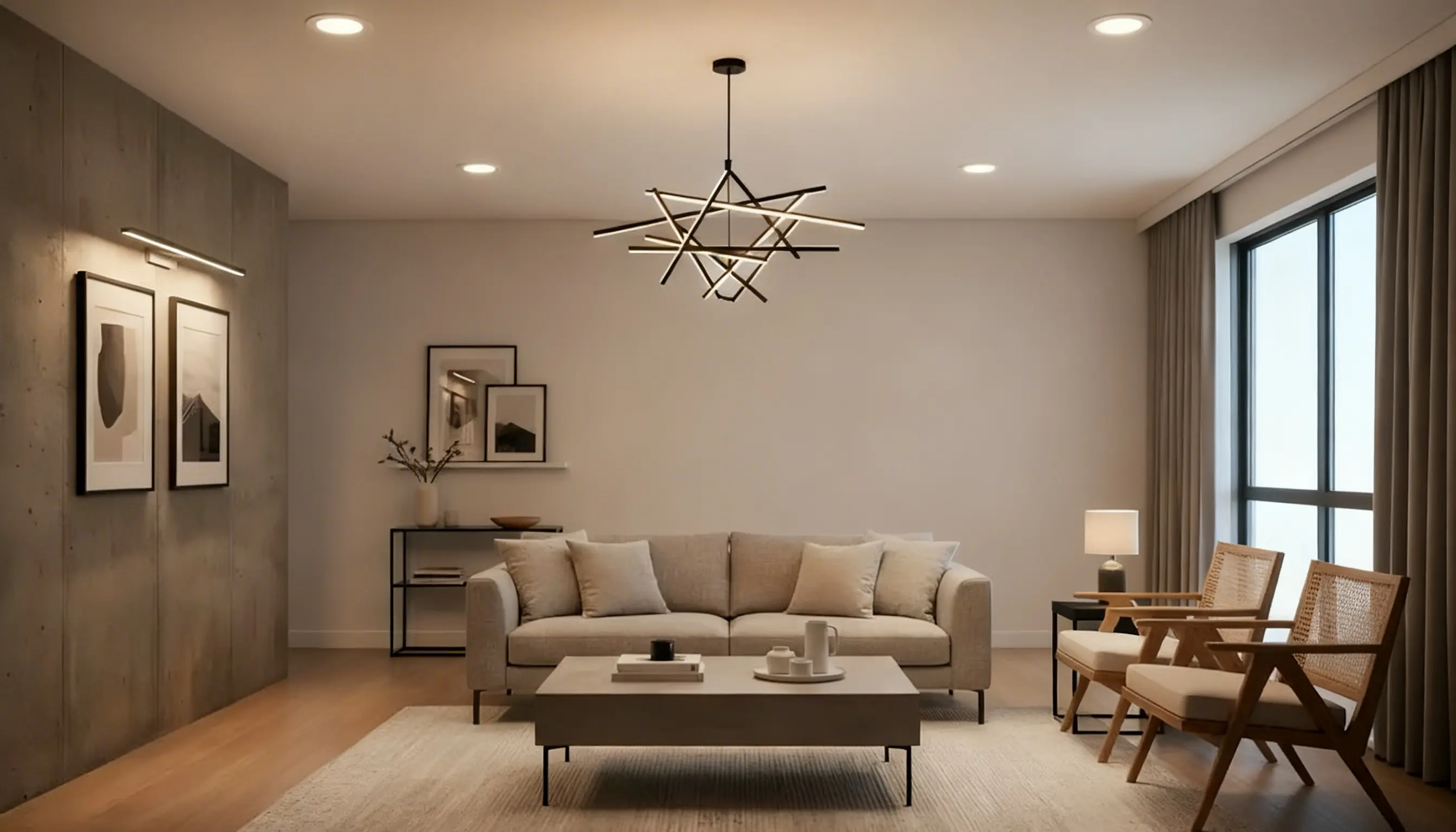
Layered lighting is a professional lighting design approach that integrates ambient, task, and accent lighting. By distributing light appropriately according to spatial requirements and usage scenarios, it creates a “multi-layered” lighting system rather than uniform illumination from a single light source. Layered lighting ensures adequate brightness for general lighting while highlighting spatial depth and creating a unique atmosphere, thereby enhancing both the aesthetic quality and functionality of the space.
Compared to traditional single-source lighting, layered lighting avoids issues such as dimness, excessive brightness, or uneven illumination. It not only balances functionality and aesthetics but also allows you to adjust the lighting according to the specific usage scenario. For example, task lighting can be enhanced for reading, while ambient lighting can be dimmed for relaxation. The purpose of layered lighting is to enhance the comfort and user experience of a space. It also uses varying light levels to highlight the design of the space, making areas like the living room better suited to the resident’s daily needs and creating lighting effects that a single light fixture cannot achieve.
Why Do You Need Layered Living Room Lighting?
- Practical & Versatile: Combines ambient, task and accent lights to fit all your needs—whether you’re working, relaxing or hosting, it’s got you covered.
- Cozy & Eye-Friendly: The light is soft and even, with no harsh glare or dark corners. It's perfect for long hours at home, as it's not uncomfortable to look at.
- Stylish & Polished: Adds texture to your living room, highlights your decor and elevates the overall look, matching any interior style.
- Flexible & Convenient: It is easy to adjust the brightness and switch between modes to adapt to different occasions, such as family gatherings or solo relaxation.
How to Layer Lighting in Your Living Room?
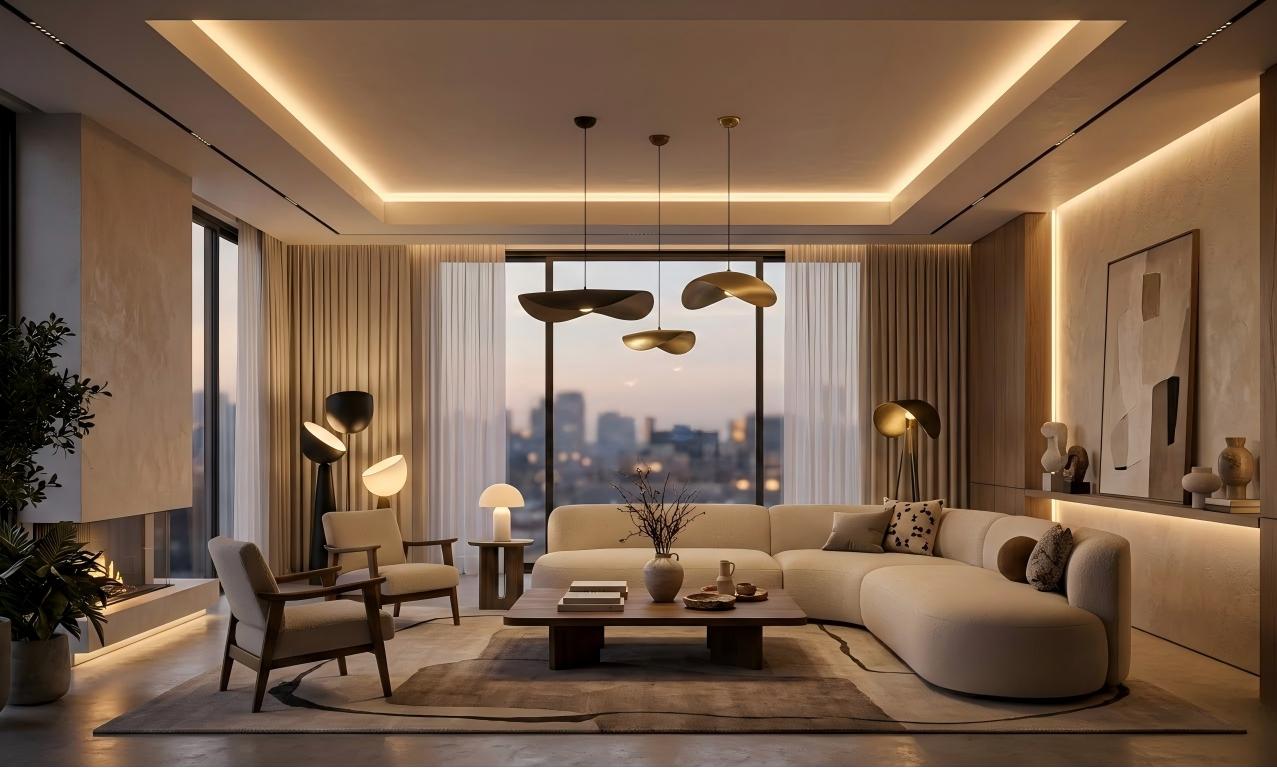
In living room lighting design, lighting is typically divided into three distinct layers, each serving a specific purpose while working in harmony with the others. These layers are ambient lighting, task lighting, and accent lighting. Only by combining all three effectively can an ideal lighting effect be achieved; relying solely on any one of them will prevent the living room's overall lighting from reaching its optimal state.
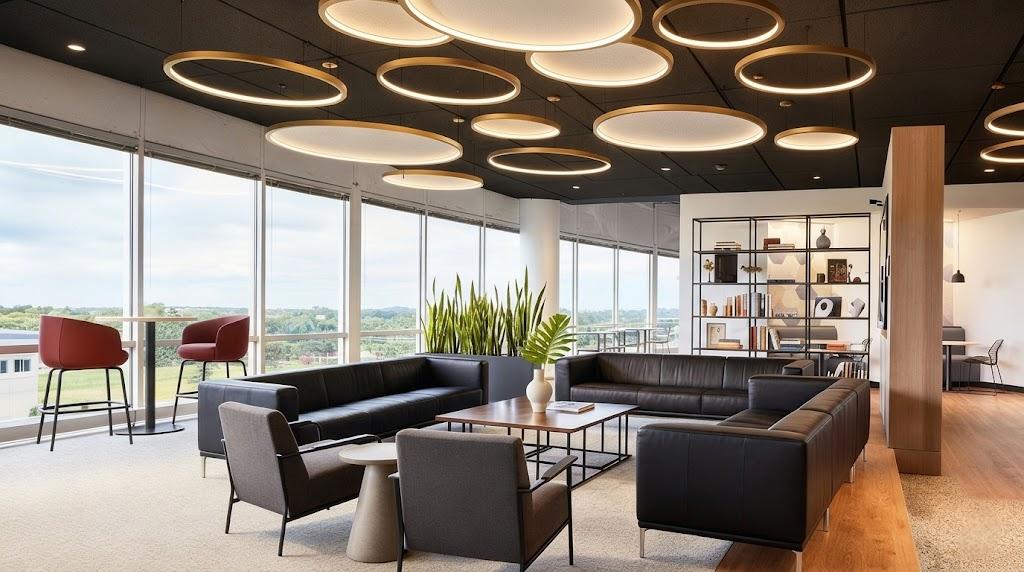
Ambient lighting is the first layer and the foundation of a room’s overall illumination. Its role is to provide a soft, even level of brightness throughout the space, allowing people to move around and carry out everyday activities comfortably while preventing the room from feeling dim or oppressive. Common fixtures used for ambient lighting include ceiling lights, pendant lights, chandeliers, and recessed downlights.
Task lighting serves as the second layer of living room illumination, primarily designed to meet the lighting needs of specific activities such as reading or working. As the name suggests, it involves light sources positioned around particular tasks. In living rooms, common examples include floor lamps beside sofas and table lamps on coffee tables. These fixtures typically offer good directionality and sufficient brightness, concentrating light precisely where users need it to deliver a more comfortable and efficient lighting experience.
Accent lighting forms the third layer of living room illumination, with its core function not being to provide basic brightness but to highlight and emphasize visual focal points within the space. For instance, a hanging artwork, a sculpture, or a textured stone feature wall can be accentuated through directional spotlights or track lighting, transforming them into the visual center of the room while simultaneously defining clearer spatial contours and layering. Compared to other lighting methods, accent lighting typically employs higher light ratios to enhance contrast and visual appeal.
Final Thoughts: Transform Your Living Room With Layered Lighting
Layered lighting is more than just a trick; it's the easiest way to transform your living room into a cosy, functional and stylish space. You don't need a complicated setup to achieve this. Simply focus on balancing practicality and comfort to create a space that fits every moment of your daily life.
When it comes to bringing layered lighting into your home, UPSHINE Lighting has you covered. As a technology-driven lighting solutions provider with export-quality standards and years of industry experience, we offer a full range of cost-effective, high-quality products, from ambient ceiling lights to flexible accent lights, designed to meet all your layered lighting needs and help you create the living room of your dreams.
Ready to upgrade your living room? Get in touch to tell us what kind of lighting vibe you're going for — we'd love to help you make it happen!