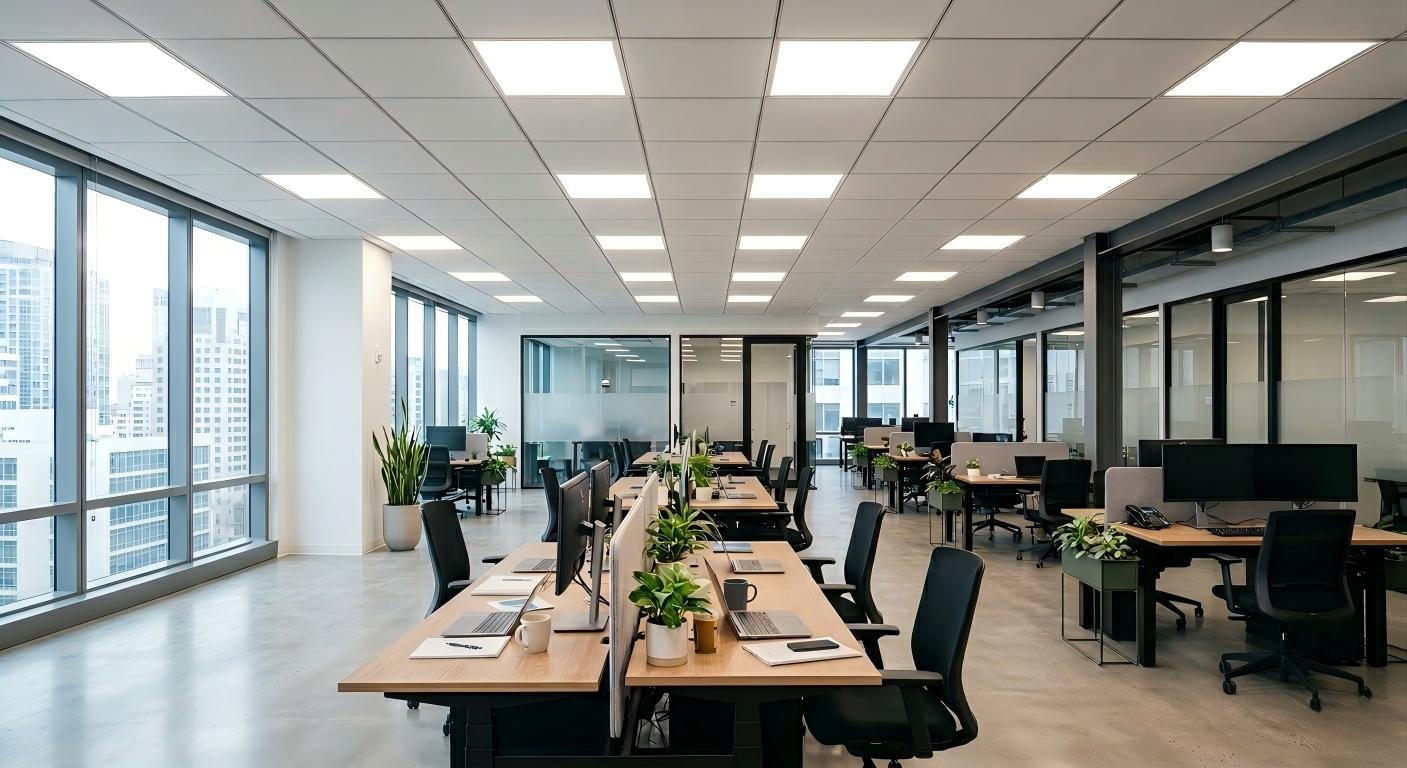



In modern commercial lighting and office spaces, LED panel lights and LED troffer lights are two of the most commonly used fixtures. Many people find that, when selecting lighting options, these two types of fixture look similar, have similar installation methods and serve largely overlapping purposes, which leaves them unsure of which to choose.
However, LED panels and LED troffers differ significantly in terms of structural design, installation compatibility, lighting performance and suitable applications. Selecting the incorrect option can affect the overall quality of the interior design and may lead to maintenance issues and subpar lighting results. This article will help you clearly distinguish between the two, so you can understand their differences and make a confident choice.
What is an LED Panel Light?
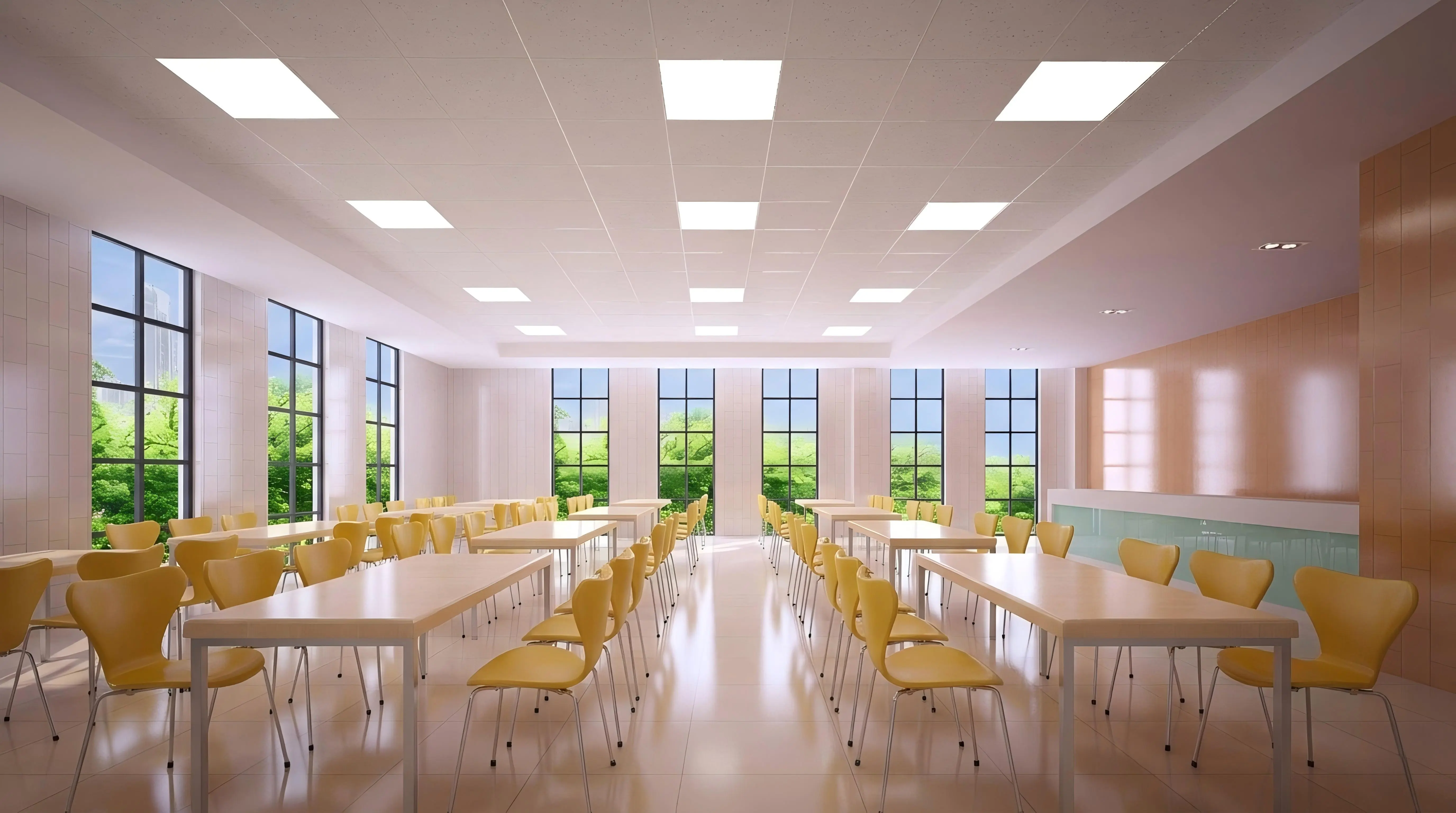
An LED panel light is a modern, flat, thin lighting fixture utilizing integrated LED technology to deliver bright, flicker-free, and uniform illumination across indoor spaces. Depending on your installation needs, these panels primarily fall into two categories: recessed and surface-mounted. Recessed panels feature an ultra-thin profile and secure into ceiling cutouts using spring clips, creating a seamless, flush finish with the architecture. In contrast, surface-mounted panels require no cutouts and are fixed directly via brackets and screws, making them ideal for a wider range of environments. With their versatile sizes, superior energy efficiency, long lifespan, and eco-friendly design, LED panel lights have become one of the most versatile lighting solutions for modern offices, commercial spaces, and residential interiors.
What is an LED Troffer Light?
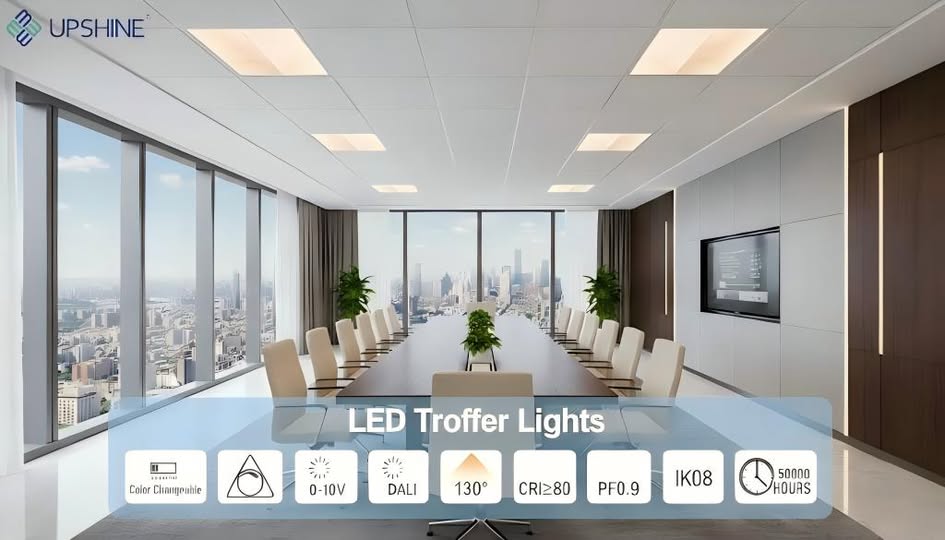
An LED troffer light is a type of lighting fixture designed to be recessed into a ceiling. It is also commonly referred to as recessed lighting. Typically rectangular in shape, it sits flush within a ceiling panel or drop ceiling grid, with only the light-emitting surface visible, which creates a clean, streamlined look, keeping the ceiling visually uncluttered.
Inside, LED troffer lights work by passing light from LED sources through a lens or diffuser to spread illumination evenly across the room. This design distributes light over a wide area, minimising glare and eliminating harsh shadows to create a comfortable, visually balanced environment.
LED troffer lights are notably versatile when it comes to installation. While they are most commonly installed in standard drop ceiling grids, select models also support surface-mount configurations. This flexibility enables users to select the installation method that best suits their ceiling type and spatial requirements.
Thanks to their efficient performance, adaptable installation options and unobtrusive appearance, LED troffer lights are the go-to choice for spaces that require broad, even illumination without compromising on aesthetics, including commercial offices, healthcare facilities, educational institutions and industrial environments.
Pros & Cons of LED Panel and LED Troffer
1. LED Panel Lights
These are ultra-thin fixtures designed for a modern, "seamless" look. They typically use edge-lit or back-lit technology to create a uniform glow across the entire surface.
Pros
- Aesthetics: Extremely slim profile provides a sleek, minimalist appearance that sits flush with the ceiling.
- Uniformity: Provides soft, diffused light with very few shadows or "hot spots."
- Versatility: Beyond T-bar ceilings, they can often be surface-mounted or suspended using kits.
- Weight: Generally lighter and easier to handle during installation.
Cons
- Light Control: The wide beam angle offers less control over where the light goes, which can sometimes lead to glare on computer screens.
- Maintenance: Because they are often sealed units, if the internal LEDs or driver fail (and aren't accessible), the entire panel usually needs replacement.
2. LED Troffer Lights
Troffers are recessed lighting fixtures that look like rectangular boxes. They often feature "volumetric" designs with architectural baskets or reflectors to bounce light more effectively.
Pros
- Optical Precision: The housing allows for advanced optics and reflectors, which can direct light downward more efficiently and reduce ceiling glare.
- Visual Comfort: Many troffers use a "center basket" design that hides the LEDs from direct view, creating a more comfortable environment for office workers.
- Durability: Their robust, "boxy" housing provides better protection for internal components and can act as a better heat sink.
- Customization: Easier to find versions with integrated sensors (motion/daylight) or high-spec emergency battery backups.
Cons
- Higher Initial Cost: As you noted, the complex housing and specialized optics often lead to a higher price point compared to standard flat panels.
- Installation Depth: Because they are deeper, they require more "plenum space" (the gap above the dropped ceiling). This can be a dealbreaker in buildings with very low clearance.
- Weight: They are bulkier and heavier, often requiring more secure anchoring to the ceiling grid.
LED Panel vs LED Troffer: Key Differences
1. Design & Appearance
LED panels feature a slim, flat profile with a minimalist look that blends naturally into modern interiors. LED troffers have a deeper, tray-like housing built for function-first commercial environments.
2. Light Output & Purpose
LED panels are designed for general ambient lighting — producing soft, evenly distributed illumination that creates a comfortable atmosphere across an entire space. LED troffers serve general or task lighting needs, delivering more focused and controlled light output suited for work-intensive environments.
3. Light Distribution
Panels spread light broadly and uniformly across a wide surface area, minimizing shadows and glare. Troffers use reflectors, lenses, or louvers to direct light more precisely — making them ideal where targeted illumination is required.
4. Installation Method
LED panels are highly versatile — they can be recessed, surface-mounted, or suspended from the ceiling. LED troffers are primarily designed for recessed installation within standard 2×2 or 2×4 drop ceiling grids.
5. Retrofit Compatibility
Troffers are engineered as direct replacements for older fluorescent fixtures, making upgrades straightforward. Panels may require additional ceiling modifications when retrofitting existing systems.
6. Cost
LED panels generally come at a lower upfront cost. LED troffers carry a higher initial investment due to their more complex housing and optical components.
Buying Guide: How to Choose Between Them
Choosing between these two fixtures depends on your ceiling space, budget, and how much you care about the feel of the light. Here is a streamlined guide to help you decide.
1. Check Your Ceiling Depth
The first thing to look at is the space above your drop ceiling (the plenum).
- LED Panels: These are ultra-thin. If you have pipes, ductwork, or very little clearance above the ceiling grid, a flat panel is usually the only option that will fit.
- LED Troffers: These are bulky boxes. You need several inches of vertical clearance to tilt them into the grid and set them down.
2. Light Quality and Glare
How the light hits your eyes changes the "vibe" of the room.
- LED Panels: These produce a very uniform, edge-to-edge glow. Because the light source is flat and wide, they can sometimes cause glare on computer screens if they are high-output.
- LED Troffers: Most modern troffers use a center basket design. The light is reflected off the interior housing before it hits the room. This creates a softer, volumetric light that is much easier on the eyes during long work hours.
3. Maintenance and Longevity
Think about what happens five to ten years from now.
-
LED Panels: These are typically sealed units. If the internal LEDs fail, you usually have to replace the entire fixture.
-
LED Troffers: Because they are larger, they often have more accessible internal components. It is often easier to replace a driver or access the wiring in a troffer than in a slim panel.
4. The Cost Factor
Your budget for the total project is the final filter.
-
LED Panels: Usually the most budget-friendly. They are simpler to manufacture and ship because they are flat and light.
-
LED Troffers: Higher initial investment. The metal housing is more complex, and the optics are more advanced. However, they can make a space look more high-end and architectural.
Frequently Asked Questions
1. What is the main difference between LED panel lights and LED troffers?
The key difference lies in design and installation. LED panel lights are ultra-slim, lightweight, and can be surface-mounted, recessed, or suspended. LED troffers, on the other hand, are deeper fixtures specifically designed to fit into standard drop ceilings (typically 2x2 or 2x4 grids).
2. Which is better for modern interior design?
LED panel lights are generally preferred for modern spaces due to their sleek, minimalist appearance and even light distribution. Troffers are more commonly used in traditional commercial settings like offices and schools.
3. Do LED panels and troffers provide the same brightness?
Yes, both can deliver similar lumen outputs depending on the model. Brightness is determined by lumens, not the fixture type. However, panel lights often provide more uniform, glare-free illumination.
4. Which is more energy-efficient?
Both LED panels and troffers are highly energy-efficient compared to traditional fluorescent fixtures. Their efficiency largely depends on driver quality and LED chips, but in most cases, performance is comparable.
5. Are LED panel lights easier to install than troffers?
Yes. LED panels offer more flexible installation options (surface, suspended, recessed), making them easier to install in a variety of ceilings. Troffers are mainly limited to drop ceiling installations.
6. Which option is more suitable for offices?
Both are suitable, but the choice depends on the ceiling type.
- Use troffers for standard grid ceilings.
- Choose panel lights for a more modern look or for ceilings without grid systems.
7. Which one has a longer lifespan?
Both typically offer long lifespans (around 50,000 hours or more), depending on quality. There is no significant difference if both use high-quality components.