


In the restaurant sector, lighting is one of the most overlooked design decisions. While most owners focus on ambience, such as warm versus cool tones and bright versus dim lighting, they often overlook a far more critical specification: the Color Rendering Index (CRI). The CRI determines how accurately your light source reveals the true colours of everything it illuminates, from the food on the plate to the décor on the walls. In a restaurant setting, where visual appeal directly affects appetite, mood and customer satisfaction, achieving the right CRI is essential, not optional.
This guide explains what CRI is, why it is particularly important in food service environments, and how the right lighting fixtures can transform the entire dining experience.
What Is CRI?
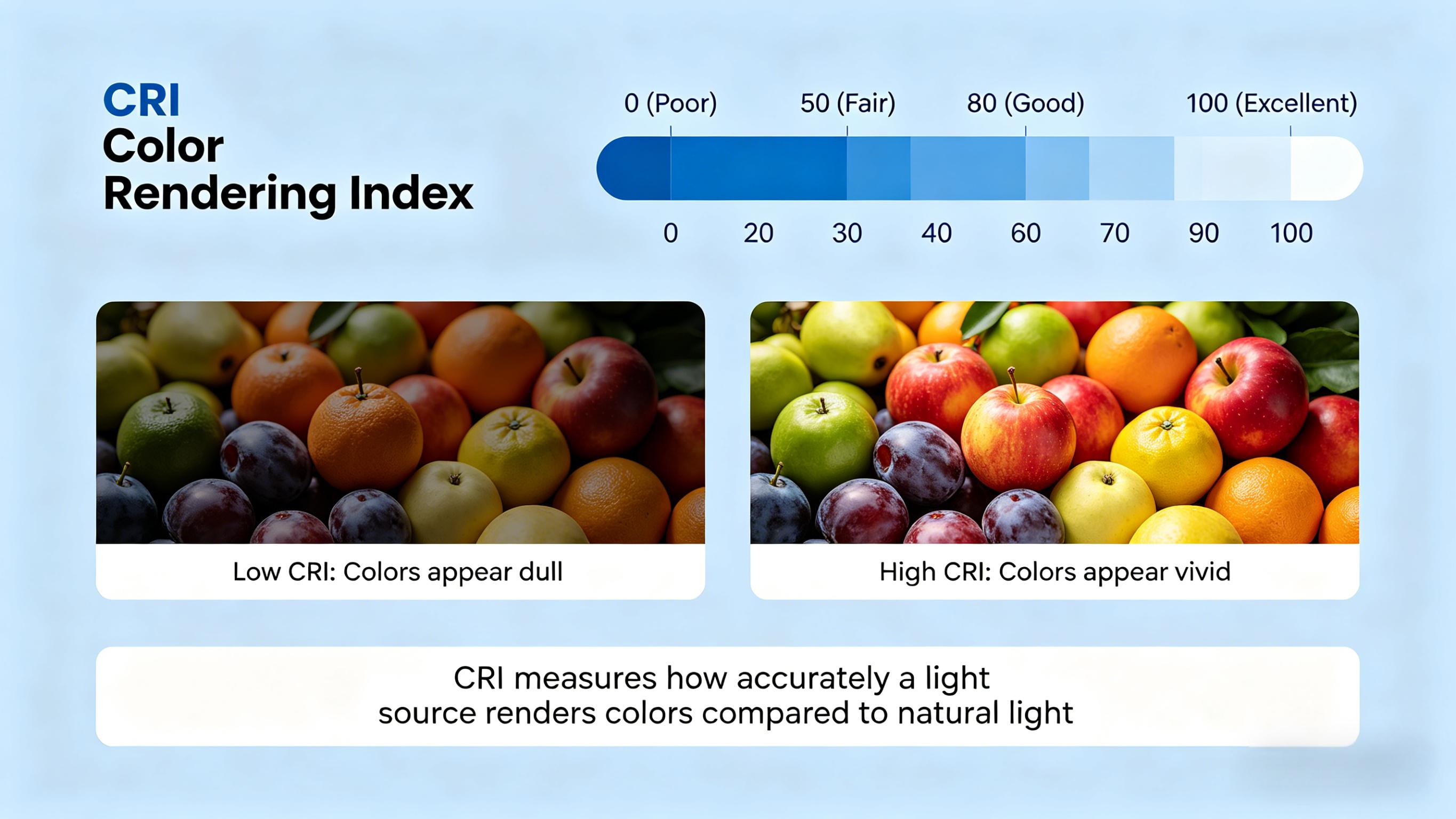
CRI is a quantitative measure of a light source's ability to reveal the colors of various objects faithfully in comparison with a natural light source (like the sun). It is measured on a scale from 0 to 100.
- Low CRI (< 80): Colors look dull, flat, or "off-tinted" (think old-school parking lot lights or cheap office flourescents).
- High CRI (90+): Colors appear vibrant, accurate, and true to life.
Why Should Restaurant Owners Care?
For a restaurant, lighting isn't just about seeing the menu; it’s about sensory marketing. Here is why the CRI rating of your bulbs matters:
1. Visual Appetizingness
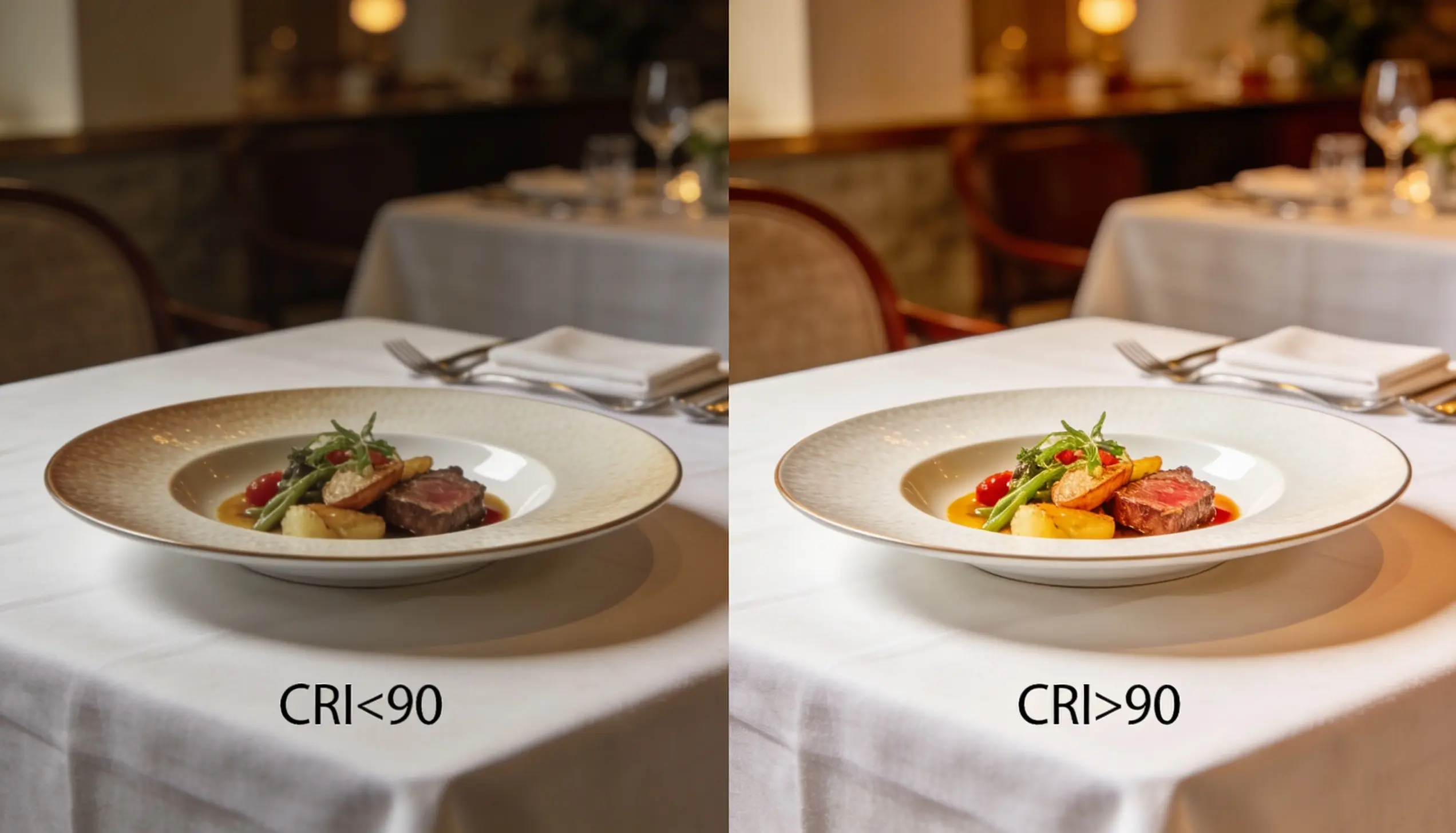
Humans eat with their eyes first. A steak under low-CRI lighting can look greyish or muddy, while fresh greens might look wilted. High-CRI lighting (90+) ensures that the marbling of the meat looks rich and the vegetables look crisp and bright, making the food appear more delicious and premium.
2. Atmosphere and Skin Tones
Low-CRI lighting often has a "green" or "yellow" cast that can make guests look tired or sickly. High-CRI lighting renders skin tones warmly and accurately. When guests look good in the mirror and across the table, they feel more comfortable, stay longer, and are more likely to return.
3. Brand Perception and Decor
If you’ve invested thousands in custom mahogany tables, velvet booths, or curated art, low-CRI lighting will wash those colors out, making expensive finishes look cheap. High-CRI bulbs bring out the depth in wood grains and the richness of fabrics.
How High CRI Lighting Affects Food Perception
The quality of lighting is an often-overlooked core element that shapes diners’ visual experience and overall perception of food. Among all lighting metrics, CRI (Color Rendering Index) plays the most critical role in presenting food colors, textures and freshness, directly influencing appetite, dining satisfaction and customers’ judgment on food quality.
Low CRI lighting (CRI below 90) fails to restore natural color accurately. Under such light, red meat looks dull and gray, fresh vegetables lose bright green tones, and sauces, desserts and seafood appear faded and lifeless. The overall color cast flattens food details, making dishes look unappetizing, stale and low-quality. For restaurants, poor color rendering weakens the visual attraction of menu dishes, reduces customers’ desire to eat, and even leaves a negative impression on ingredient freshness and cooking standards.
In contrast, high CRI lighting (CRI above 90) reproduces true, natural colors faithfully. It enhances the rich marbling of steak, the tender gloss of grilled meat, the vivid saturation of fruits and vegetables, and the delicate layers of soups and side dishes. Every texture detail—juiciness, crispness and creamy texture—is visually amplified under high-color-rendering light. Warm, accurate color presentation makes food look fresh, delicious and high-end, instantly stimulating appetite.
Beyond visual attraction, high CRI lighting also elevates the entire dining atmosphere. It creates a warm, comfortable and premium ambient environment, matching the positioning of casual cafes, fine dining restaurants and high-end bistros. Diners not only taste the food but also enjoy a visually pleasant dining experience, which boosts overall satisfaction, extends dining time and increases the chance of repurchase and social media sharing.
For food service businesses, high CRI lighting is no longer a luxury upgrade but a practical investment. It bridges the gap between food taste and visual presentation, helps restaurants highlight culinary advantages, build a high-quality brand image, and gain a competitive edge in the catering industry. Reasonable lighting design with high CRI fixtures turns ordinary dishes into visually appealing delicacies, subtly guiding customers’ food perception and consumption decisions.
Comparison: Food Under Different CRI Levels
| Food Item | Low CRI (<80) | High CRI (90+) |
| Salmon | Appears yellowish or pale pink; looks "aged." | Deep, vibrant orange/pink; looks fresh-caught. |
| Steak | Looks greyish-brown; marbling is indistinct. | Rich, warm reds; fat looks white and clean. |
| Salad/Herbs | Looks limp and olive-drab. | Bright, "electric" greens; looks crisp and hydrated. |
| Fruit | Colors look flat; berries lose their "glow." | Deep jewel tones; highlights look glossy and inviting. |
Common CRI Mistakes Restaurants Make (and How to Avoid Them)
When designing restaurant lighting, many operators focus on brightness or aesthetics—but overlook one critical factor: Color Rendering Index (CRI). Poor CRI choices can quietly undermine food presentation, ambiance, and even the customer experience. Here are the most common mistakes to watch out for:
1. Equating brightness with quality
A well-lit space isn’t necessarily a well-rendered one. High-lumen lighting may make a room look bright, but if the CRI is low, food can appear dull and unappetizing. True visual appeal comes from accurate color—not just intensity.
2. Settling for CRI below 80
While CRI 70–80 lighting is still widely used, it falls short in hospitality settings. Colors appear less vivid and slightly distorted. For restaurants, CRI ≥90 is generally recommended to ensure dishes look as appealing as they taste.
3. Neglecting food presentation
Lighting plays a direct role in how food is perceived. Low-CRI lighting can make fresh ingredients look lifeless—reds turn brownish, greens lose their vibrancy, and overall plating loses its impact.
4. Mixing inconsistent CRI levels
Using different CRI levels across dining areas, display counters, and kitchens can create a disjointed visual experience. Consistency is key to maintaining a cohesive and professional atmosphere.
5. Ignoring customer appearance
Lighting doesn’t just affect food—it affects people. Low CRI can make skin tones look unnatural or washed out, which impacts both in-person perception and social media photos.
6. Overlooking R9 (red rendering)
CRI alone doesn’t tell the full story. The R9 value, which measures how well reds are rendered, is especially important in restaurants. Poor R9 performance can make meats, sauces, and warm-toned dishes look less fresh and appealing.
Lighting Solutions from UPSHINE Lighting
At UPSHINE Lighting, we understand that in the restaurant industry, you're not just serving a meal — you're creating an experience. Every sear on a steak and every vibrant garnish deserves to be seen in the best possible light.
Our professional, high-CRI LED solutions bridge the gap between "functional lighting" and "culinary artistry". By prioritising high R9 values and colour stability, UPSHINE fixtures ensure your interior design shines and your menu looks exactly as the chef intended.
Let's transform your space!
Would you like to know how upgrading to 90+ CRI could transform the atmosphere in your dining room? Whether you are launching a new concept or looking to refresh your current ambience, our team can help you strike the perfect balance between efficiency and elegance.