


 The kitchen is often called the heart of the home, but without the right lighting, even the most beautiful kitchen can feel dull and cramped. LED track lighting has emerged as a superior choice, offering flexibility and a sleek, contemporary aesthetic. However, achieving the perfect balance of form and function requires more than just picking a stylish fixture; it demands a understanding of light quality, placement, and system compatibility. This article aims to provide a comprehensive guide on how to navigate these essential factors to choose the right LED track lighting that will elevate both the functionality and the design of your kitchen space.
What is LED Track Lighting?
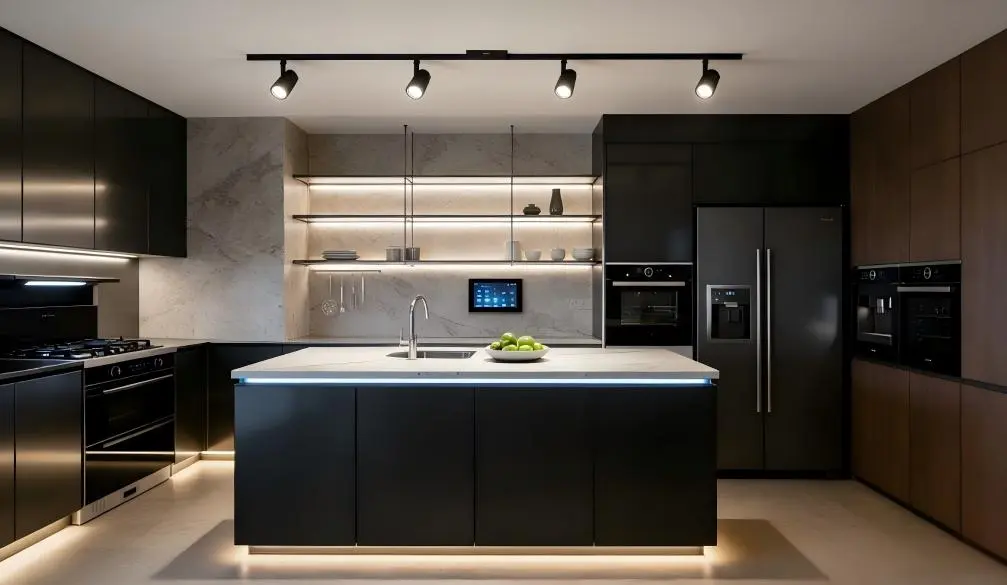
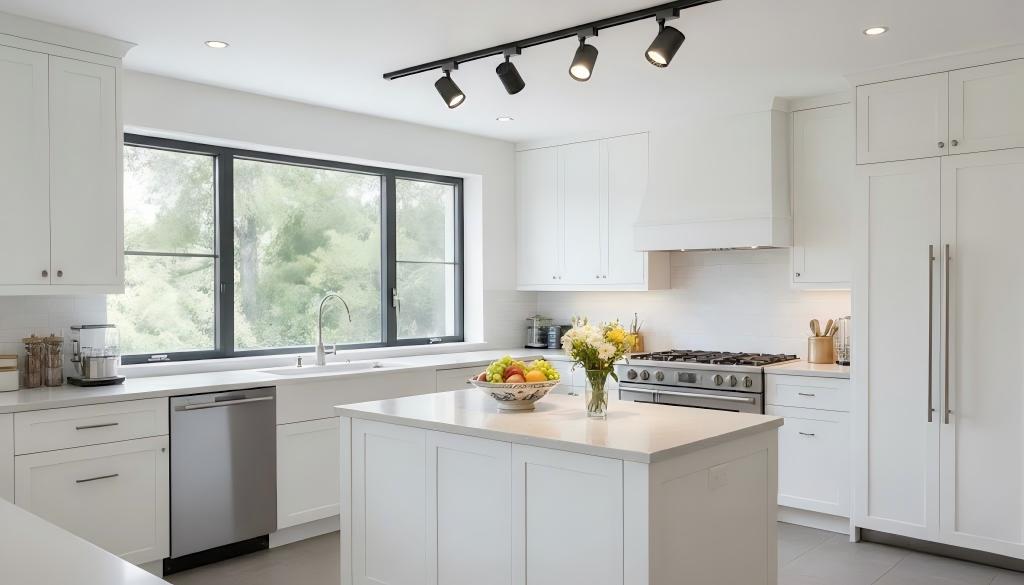
LED track lighting combines a track system with LED light sources, offering a clean look and flexible layout options. LED Track lights are installed on linear tracks mounted to ceilings or walls, featuring adjustable lamp heads that enable precise control over the direction of light. This flexibility makes them ideal for accent lighting, particularly for highlighting architectural details, artwork, or display areas. LED track lights serve as an ideal replacement for traditional fluorescent fixtures, significantly reducing energy consumption while delivering brighter, more uniform illumination with precisely adjustable directional control. As a result, they are widely used in retail stores, art galleries, restaurants, and key focal points in residential interiors.
The Advantages of Track Lighting for Modern Kitchens
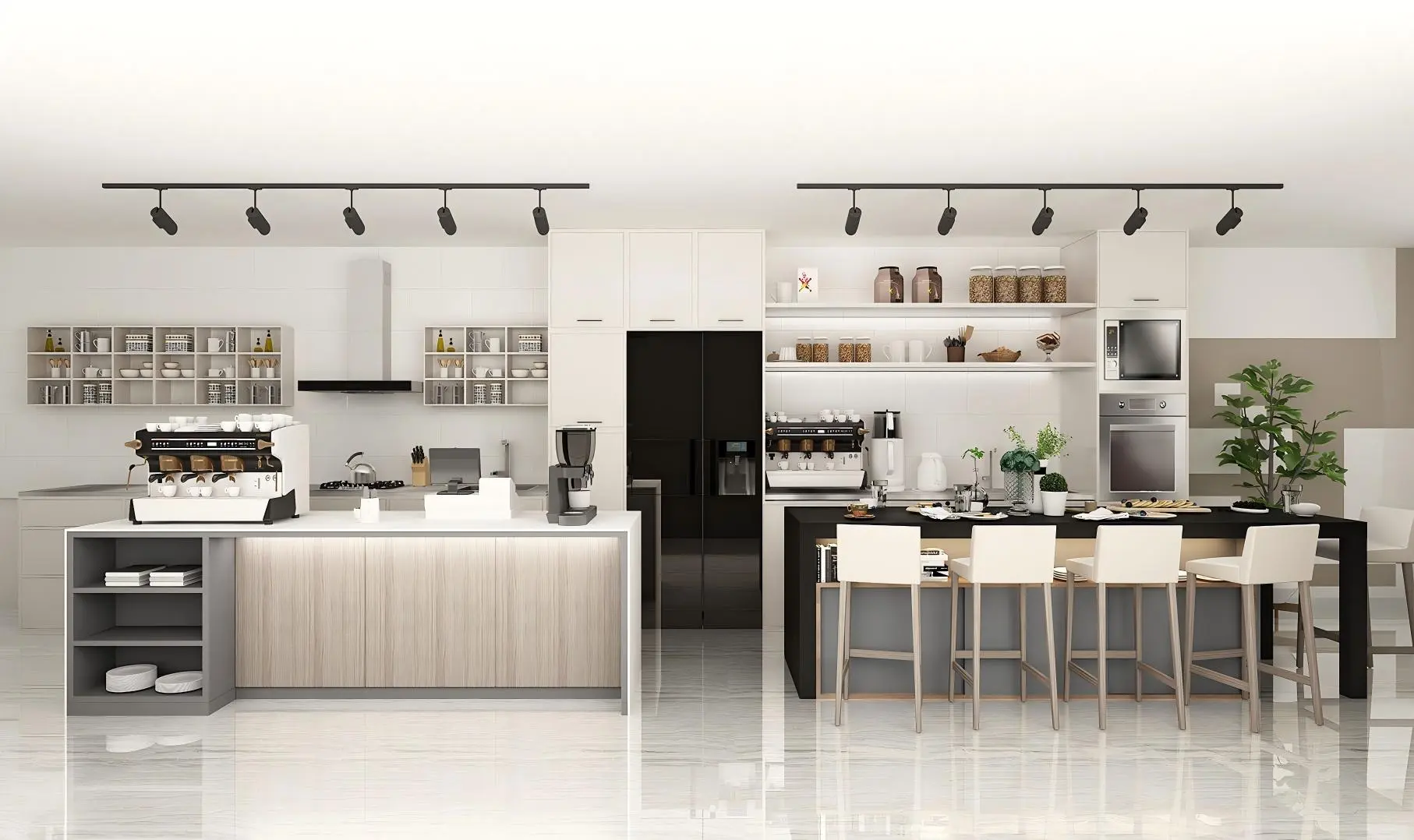
LED track lights are highly energy-efficient, and their adjustable heads allow for flexible, zoned lighting that creates a layered, dynamic illumination effect. For these reasons, track lighting is becoming increasingly popular in home interiors. Compared to traditional pendant lights, track lights offer a range of advantages, making them a versatile and practical choice for modern kitchen spaces.
- Superior Versatility and Customization
Unlike traditional recessed ceiling lights, which are fixed in position, track lighting has a modular design that allows the fixtures to be easily adjusted or repositioned as needed. This means you can direct individual lights towards specific areas, such as the sink, stove or butcher's block, without the need for rewiring. If you decide to add a kitchen island later, for example, you can simply clip more fixtures onto the existing track.
- Precision Task Lighting
The beauty of LED track lighting lies in its versatility. Unlike standard bulbs that scatter light in all directions, track systems allow you to "shape" and "aim" the light exactly where work happens. Every lamp head can be adjusted to hit different work areas at exactly the right angle. By choosing a narrow beam spread, you can concentrate powerful light right where you’re chopping or cooking, ensuring the rest of the room stays comfortable and glare-free for your diners.
- Energy Efficiency
Switching to LED track lighting means you don't have to sacrifice brightness for efficiency. These systems offer the same brilliant light quality as traditional options but at a much lower energy cost, while their extended lifespan virtually eliminates the hassle and expense of frequent maintenance.
- Space-Saving Design
While pendant lights hang down and take up a lot of visual space, track lighting features a low-profile, linear design that hugs the ceiling. Because the profiles are so slim, they don't intrude on your vertical space; instead, they act as visual lines that stretch the room's perspective. If you’re dealing with the lower ceilings of a modern apartment, track lights help you avoid a cramped atmosphere, giving your space a much-needed sense of height and openness.
- Aesthetic Appeal
Track lighting adds a clean, linear flow to your ceiling while putting the spotlight exactly where you need it. Its adjustable heads allow for precise, focused illumination that enhances both functionality and safety during cooking and food preparation. It’s the perfect blend of function and style, giving your kitchen a spacious and welcoming feel.
Common Types of Track Lighting Fixtures to Consider
Choosing the right track lighting starts with knowing your options. Since different systems offer unique ways of mounting and powering the lights, the best choice really depends on your kitchen’s layout and your specific lighting needs. By selecting the right type, you ensure that your lighting isn't just practical, but also fully realizes the design potential of your space.
- Linear Track Lighting
Linear track lighting is the most classic and widely used type of track lighting, typically consisting of a straight track with multiple adjustable light heads. Installation is straightforward: the track is mounted to the ceiling with screws and connected to the existing electrical circuit. Once the track is in place, the light heads can be easily inserted into the track slot and secured by twisting them into the inner edge.
This system offers exceptional flexibility, allowing the fixtures to slide freely along the entire length of the track. Track sections are commonly available in straight lengths ranging from two to eight feet, and can be configured to suit different kitchen layouts — including straight runs or L-shaped designs. Additionally, linear track lighting often operates on 12V or 24V low-voltage systems, providing efficient illumination while reducing energy consumption, making it a visually appealing and cost-effective solution.
- Monorail Track Lighting
Monorail track lighting is a more design-oriented and flexible track lighting system, characterized by its bendable single-rail structure suspended from the ceiling. Unlike traditional track lights, Monorail tracks can be curved up to 30 degrees to suit spatial requirements, making them ideal for spaces seeking personalized design. Fixtures can be suspended at varying heights to create a more fluid and dynamic lighting effect.
The Monorail track light heads also support multi-angle adjustment, enabling precise illumination of work surfaces and focal areas. While fulfilling functional lighting requirements, the track's striking form itself becomes a visual highlight within the space, making it suitable for modern, artistic, or high-end custom kitchen designs.
- Cable Track Lighting
Cable track lighting is a type of lighting system that uses a tensioned wire system as the conductive track, featuring a lightweight and modern structure that can be installed on ceilings or walls. The luminaires are suspended between two parallel cables, allowing flexible movement and positioning within a defined range to accommodate diverse lighting requirements. The slender cables enhance the overall visual lightness, avoiding spatial oppression while amplifying a sense of openness. This lighting solution excels in high-ceiling or vaulted spaces and complements minimalist or industrial design aesthetics exceptionally well.
Choosing the Right LED Track Lighting Fixtures
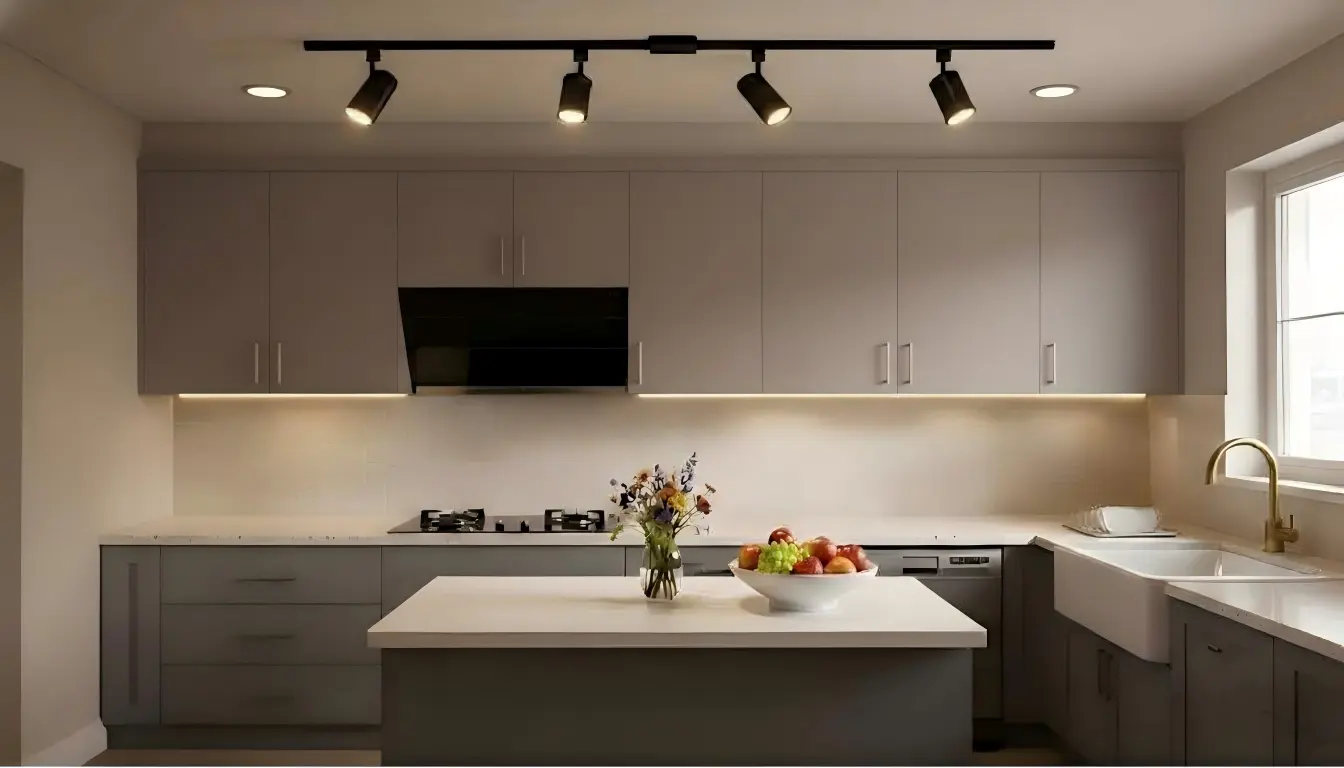
Selecting the perfect fixtures is about more than just picking a style; it’s about tailoring the light to your specific workflow. To get the best results for your modern kitchen, keep these factors in mind:
- Beam Angle for Precision Work
For kitchen tasks, a medium beam angle (around 25° to 40°) is usually ideal. A narrow beam (15°) acts as a spotlight for specific features like an herb garden, while a wider flood beam (60°) is better for general ambient light. Using a 30° beam over your chopping station ensures the light is concentrated exactly where the knife meets the board without distracting glare.
- Brightness and Lumen Output
Kitchens require high-intensity light for safety. Aim for fixtures that provide at least 700 to 1,000 lumens per head. For task-heavy areas like the island or stove, look for a total light output that provides roughly 50 to 80 foot-candles (a measure of light intensity) on the counter surface to ensure every detail is visible.
- Optimal Color Temperature (K)
The vibe of your kitchen depends on the different color temperature. 3000K (Warm White) is the favorite for residential kitchens as it feels inviting yet clean. However, if you prefer a high-energy and brighter look, 4000K (Neutral White) mimics natural daylight and can help you stay alert during meal prep.
- High CRI
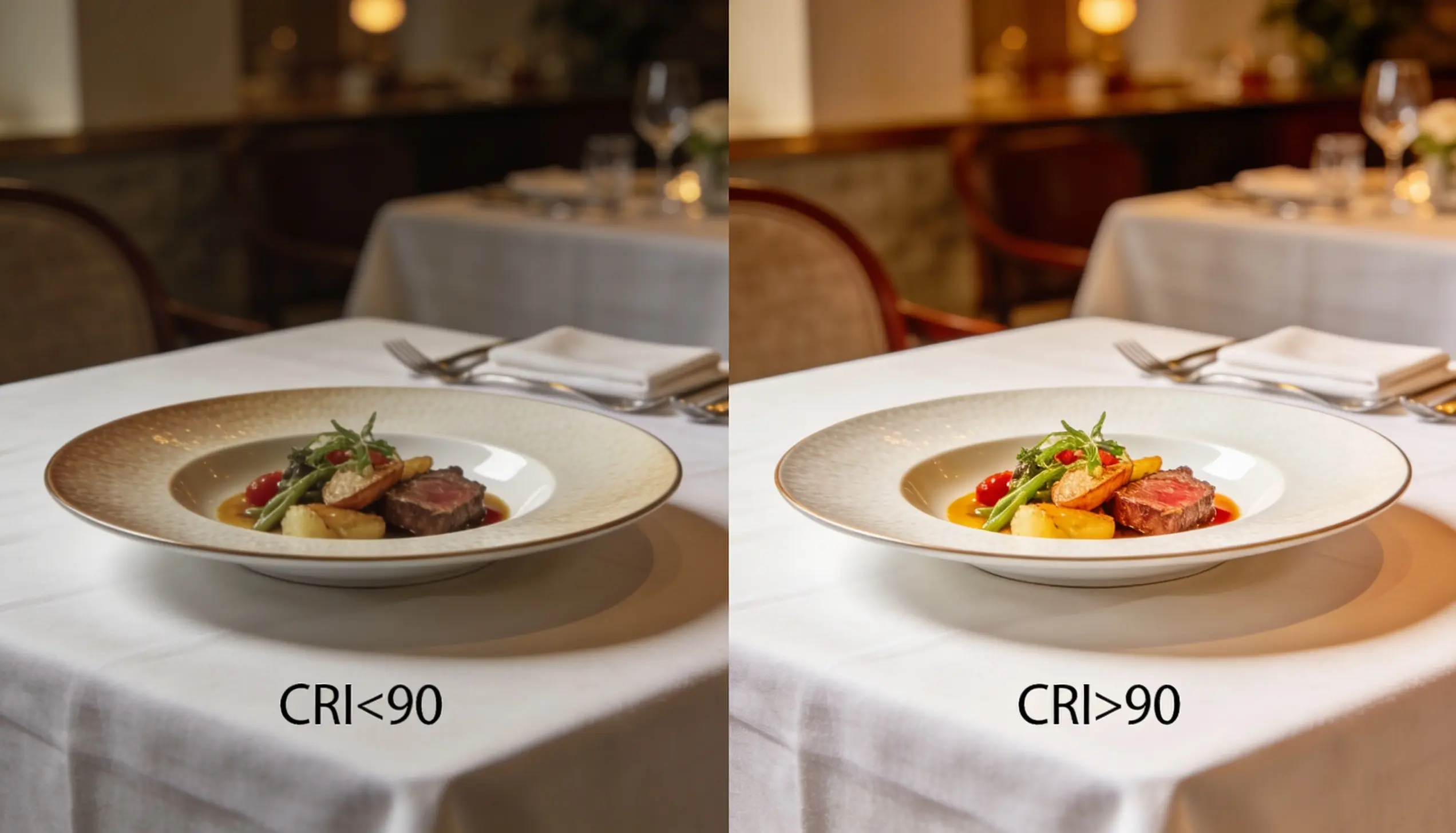
The Color Rendering Index (CRI) measures how accurately a light source reveals true colors. In a kitchen, you should look for lighting with CRI 90+. High CRI ensures that meat looks red rather than gray and that vegetables look vibrant. Better color accuracy makes food look more appetizing and helps you judge the freshness of ingredients more effectively.
- Dimmability for Versatility
Modern kitchens are for more than just cooking. Choose dimmable LED heads so you can crank up the brightness for heavy prep work, then dial it down to a soft, atmospheric glow when it’s time to sit down for dinner.
- Interchangeable Optics
Look for fixtures with swappable lenses. Some high-end LED track heads allow you to change the beam angle lens or add a "honeycomb louver" (a mesh insert) later on. This is incredibly helpful if you rearrange your furniture and need to shift from a wide flood to a tight spot without buying new fixtures.
Where to Place LED Track Lights in a Kitchen
It's important to find the right placement for track lighting. If you place it too far back, you'll work in your own shadow. If you place it too close to the wall, you’ll lose the light’s effectiveness. Here is a guide to help you position your tracks for maximum impact:
1. Over the Countertops
LED track lights should be positioned directly above or slightly behind the work surface to provide bright, focused task lighting for chopping, mixing, and cooking. Utilize the adjustable heads of track lights to precisely direct light where needed.
2. Above the Kitchen Island
Kitchen islands typically serve as both a food preparation area and a dining space. Track lighting should be centered along the island's length to achieve uniform illumination. This approach highlights the island as a design focal point while minimizing shadows on the work surface.
3. Highlighting the "Golden Triangle"
In kitchen design, the “golden triangle” refers to the workflow path between the stove, sink, and refrigerator. It is essential to install at least one directional track light at each key point to ensure high-traffic areas remain well-lit at all times. This allows users to clearly identify stove knobs, effortlessly wash dishes, and quickly retrieve items from the pantry.
4. Along the Cabinet Line (For Wall Washing)
If you have beautiful cabinets or a textured backsplash (such as subway tiles or stone), you can leverage the flexibility of LED track lighting to wash light across the wall like flowing water. During installation, angle several light heads toward the cabinets or backsplash. By utilizing the reflection of light off vertical surfaces, it can create a sense of depth in the space, making the kitchen appear more spacious while enhancing its design aesthetic.
FAQs about Kitchen Track lighting
1. Can track lighting be the only light source in a kitchen?
While track lighting is incredibly powerful, it works best as part of a layered lighting plan. In a small-to-medium kitchen, a well-placed track system can provide both ambient (room-filling) and task lighting. However, for larger kitchens, we recommend pairing it with under-cabinet LED strips to ensure there are zero dark spots on your primary work surfaces.
2. How many track heads do I actually need?
A good rule of thumb is one track head for every 2 to 3 feet of track. For a standard kitchen, a 4-foot track with 3 to 4 heads is usually sufficient to cover the main sink and prep areas. Remember, you can always add or remove heads later if you find the space is too bright or too dim.
3. Is track lighting out of style?
Not at all! While the bulky, "studio" cans of the 1980s are dated, modern LED track lighting is a top trend in contemporary and industrial design. Today’s fixtures feature ultra-slim profiles, matte finishes (like black and brass), and integrated LEDs that look sleek, minimalist, and high-end.
4. Can I install track lighting myself?
If you are replacing an existing ceiling light fixture, installation is very DIY-friendly. Since the track connects to a single standard junction box, you don't need to cut multiple holes in your ceiling like you would for recessed lighting. However, if you need to run a new electrical circuit, it’s best to hire a licensed electrician.
5. Do track lights get hot?
Standard halogen track lights get extremely hot—enough to raise the temperature of your kitchen. However, LED track lights stay cool to the touch. This makes them much safer and more comfortable to work under, and it won't add extra strain to your air conditioning during the summer.
6. What should I do if my kitchen has high vaulted ceilings?
For high or sloped ceilings, use pendant track adapters or monorail systems with standoffs. These allow you to drop the light source down to a standard height (usually 7 to 8 feet above the floor), ensuring the light is close enough to the counters to be effective for tasks.